Albanian President Ilir Meta said a few weeks ago that”Albania is not a devilish country, but a democratic country that has suffered from an unprecedented devilish dictatorship and has come to value human rights as sacred“. His comments was a reaction to Iranian supreme leader ayatollah Ali Khamenei who mentioned Abania as a “very small but devilish European state, where Americans cooperate with Iranian traitors against the Islamic Republic.”
Actually, Albania backed the US attack to assassinate the Iranian general Qassem Soleiman, on the first days of January 2020. Whether Albania is a democratic country or not, it is now publicly supporting the terror of an Iranian official and advocating and sheltering the Mujahedin Khalq Organization (the MKO/ MEK/ PMOI/ Cult of Rajavi) with a long history of terrorist acts and cult-like practices.
However, the stance of the Albanian president seems expectable due to the social and health services that the MEK offers the Albanian people for free. It is also very likely that a part of those huge sums of money that the group donates western politicians in exchange for their support, goes to the pockets of Abanian government officials that have warmly welcomed the terror group in their territory.
The MEK’s so-called humanitarian services to the Albanians can be regarded as an act of generosity and sympathy. But, the true face of the MEK lies in its history and the conditions of its rank and file: about two thousand elderly members who are kept in a hypnotic-like state.
The cult-like structure of the MEK makes it an inhuman entity from inside with a humanitarian face from outside. The potential threat of Rajavi’s cult of personality has been drawn into attention since the group’s relocation to Albania. The experience of the group’s residence in Iraq has given important lessons to the international society.
The MEK functioned as a private army for Saddam Hossein. They collaborated with Baath Party in suppression of Iraqi Kurd’s and Shiit uprisings in the early 1990’s. Meanwhile they were offering social services to Iraqi Sunni tribes who were hostile against Iraqi shiits and kurds and Iranians. The MEK played a very crucial role to escalate the divisions and instability in Iraq at Saddam’s era and after its collapse. Iraqi newly established government actually expelled the group from its territory since the beginning of its ruling but they could not manage the expulsion until 2013.
The group was received by Albania under a beneficial contract between the United States and the poor Albania. Albanian government is definitely gaining advantages by offering safe heaven to the MEK but they should be absolutely warned that a terrorist cult-like establishment like the MEK will come back to haunt their country someday. This is a serious warning.
Mazda Parsi
The Threat of Cults
The Mujahedin-e Khalq keeps about two thousands members inside its cult-like structure in Camp Ashraf 3 in Albania despite the departure of a large number of its members during the two past decades. Each and every of the remaining male and female members of the MEK has a story of their family life. Most of the old members were married and had children when they joined the group. Though, they left family behind when Massoud Rajavi ordered them to divorce their spouses and to send their children out of the group. So there are a lot of heartbreaking stories of families whose destiny was involved in the ambitions of the leaders of the MEK. The stories of certain fathers and daughters have been already published on Nejat Society website. It is time to review the painful stories of some fathers and sons in the MEK.

The most iconic and prominent father and son in the MEK are Massoud Rajavi and his son Mohammad. Mohammad was an infant in the safe house where his mother Ashraf was killed in an armed clash between the MEK agents and the Iranian forces in Tehran. He was then taken to Iraq and then to Europe where he grew up and again back to Iraq. He left Iraq together with other members of the group. In Albania left the group and went to Norway where he goes to university under the supervision of the MEK commanders.
According to the testimonies of former member, Mohammad was a critic of his father’s approach in the group. Some former members even revealed that he had tried to escape the group several times but he did not succeed as far as the group was located in Iraq. As soon as the group was settled in Albania, Mohammad moved to the free world although he is not free from the group’s control.
Nonetheless, not everyone was as lucky as mohammad Rajavi. Majid Hanifsnejad is another example of the sons of the MEK’s high ranking members. Ahmad, Majid’s father is the brother of Mohammad Hanifnejad one of the early founders of the group. Former members confirm that Ahmad is one of the cruelest interrogators of the MEK. He has tortured a lot of his comrades inside the group just because they asked to leave the group. Majid was studying in a college in Europe when his father ordered him to get back to Iraq. He is brought to the group’s propaganda media from time to time to show that he is still dedicated to the cause of the group that his uncle founded.
The experience of Yasser Ezzati tells a lot more about the painful stories of fathers and sons in the MEK. Yasser Ezati was ten-years-old when he was taken away from his parents – together with hundreds of other Mujahedin children. Some went to live with members in the West, and some in children’s homes very similar to an orphanage. Yasser went to both: he spent three years with three different families in Canada, and afterwards stayed in three different children’s homes in Germany. As a child Yasser Ezati often stood in the shopping center of Cologne with the pictures of victims in Iran, collecting money for the MEK. Many members in Europe worked like this, until the governments discovered that the funds did not go to aid organizations, but to buy weapons. [source: Misled Martyrs, Judith Neurink]
The former members of the group state that his father, Hassan, is known to be a torturer in the MEK. ”He even beat me several times after I declared defection,” he said. “Whenever I missed my parents my father would receive me by beating and kicking me.”
“I have not forgotten my past yet because an important part of my life, my childhood, my adolescence were lost for the misguided goal of the MKO”, he told Nejat Society. Finally, Yasser Ezzati could manage to escape the MEK a decade ago.
Like many other children of MEK members, Amir Vafa Yaghmaei was a citizen of Sweden. He was able to leave Ashraf after 2 years with help of Swedish government. His father, Esmaeil Vafa Yaghmaei was so loyal to Mr. Rajavi at NCRI that he ignored several requests by his own son, who was 16 when sent to Iraq, and refused to help him. Amir was abused inside Ashraf and also in US Camp, TIPF, for almost 2 years. However, both Esmaeil and Amir defected the MEK. Unlike the three other cases, Amir was under the coercive indoctrinations of her mother in Camp Ashraf. He cannot forgive his mom for what he underwent under the pressure of the MEK’s cult-like system.
Nejat Society
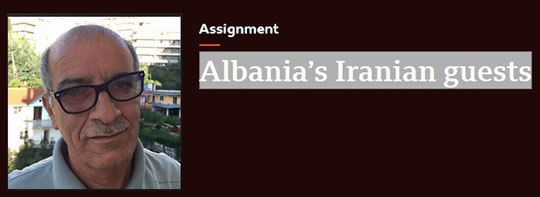
For six years, Albania has been home to one of Iran’s main opposition groups, the Mujahideen-e-Khalq, or MEK. But hundreds of members have walked out – some complaining about the organisation’s rigid rules enforcing celibacy, and control over contact with family. Now, dozens languish in the Albanian capital, Tirana, unable to return to Iran or get on with their lives.

“I didn’t speak to my wife and son for over 37 years – they thought I’d died. But I told them, ‘No, I’m alive, I’m living in Albania…’ They cried.”
That first contact by phone with his family after so many years was difficult for Gholam Mirzai, too. He is 60, and absconded two years ago from the MEK’s military-style encampment outside Tirana.
Now he scrapes by in the city, full of regrets and accused by his former Mujahideen comrades of spying for their sworn enemy, the government of the Islamic Republic of Iran.
The MEK has a turbulent and bloody history. As Islamist-Marxist radicals, its members backed the 1979 Iranian revolution that toppled the Shah. But relations with a triumphant Ayatollah Khomeini soon soured. When the government cracked down hard, the Mujahideen had to run for their lives.
Neighbouring Iraq offered sanctuary, and from their desert citadel during the Iran/Iraq war (1980-1988), the MEK fought on the side of Saddam Hussein against their homeland.
Gholam Mirzai was serving in the Iranian military when he was captured by Saddam Hussein’s forces at the start of that conflict. He spent eight years as a prisoner of war in Iraq. But in time, Iranian prisoners like Mirzai were encouraged to join forces with their compatriots. And that is what he did.
Mirzai is now a “disassociate” – one of hundreds of former MEK members who have left the organisation since they moved to Albania. With the help of funds from family, some have paid people smugglers to take them elsewhere in Europe, and perhaps two have made it back to Iran. But dozens remain in Tirana, stateless and officially unable to work.
So how did the battle-hardened members of the MEK – formerly a proscribed terrorist organisation in the United States and Europe – find their way to this corner of Europe?
In 2003, the allied invasion of Iraq made life perilous for the MEK. The organisation’s protector, Saddam Hussein, was suddenly gone, and the Mujahideen were repeatedly attacked – hundreds were killed and injured. Fearing an even worse humanitarian disaster, the Americans approached the Albanian government in 2013 and persuaded it to receive some 3,000 MEK members in Tirana.
MEK Terrorist Cult Members In Albania Who Mustn’t Think About SexFemale MEK fighters training during the Iran/Iraq war (1984)
“We offered them shelter from attacks and abuse, and the possibility to lead a normal life in a country where they are not harassed, attacked or brutalised,” says Lulzim Basha, leader of the Democratic Party, which was in government at the time, and is now in opposition.
In Albania, politics are deeply polarised – everything is contested. But, almost uniquely, the presence of the MEK isn’t – publicly, both governing and opposition parties support their Iranian guests.
For the MEK, Albania was a completely new environment. Gholam Mirzai was astonished that even children had mobile phones. And because some of the Mujahideen were initially accommodated in apartment buildings on the edge of the capital, the organisation’s grip on its members was looser than it had been previously. In Iraq, it had controlled every aspect of their lives, but here, temporarily, there was a chance to exercise a degree of freedom.
“There was some rough ground behind the flats where the commanders told us we should take daily exercise,” remembers Hassan Heyrany, another “disassociate”.
Heyrany and his colleagues used the cover of trees and bushes to sneak around to the internet cafe close by and make contact with their families.
“When we were in Iraq, if you wanted to phone home, the MEK called you weak – we had no relationship with our families,” he says. “But when we came to Tirana, we found the internet for personal use.”
Towards the end of 2017, though, the MEK moved out to new headquarters. The camp is built on a gently sloping hill in the Albanian countryside, about 30km (19 miles) from the capital. Behind the imposing, iron gates, there is an impressive marble arch topped with golden lions. A tree-lined boulevard runs up to a memorial dedicated to the thousands of people who have lost their lives in the MEK’s struggle against the Iranian government.
Uninvited journalists are not welcome here. But in July this year, thousands attended the MEK’s Free Iran event at the camp. Politicians from around the globe, influential Albanians and people from the nearby village of Manze, joined thousands of MEK members and their leader, Maryam Rajavi, in the glitzy auditorium. US President Donald Trump’s personal lawyer, Rudy Giuliani, addressed the crowd.
Rudy Giuliani: “If you think this is a cult, then there’s something wrong with you”
“These are people who are dedicated to freedom,” he said, referring to the uniformly dressed and gender-segregated MEK members present in the hall.
“And if you think that’s a cult, then there’s something wrong with you,” he added, bringing the house down.
Powerful politicians like Giuliani support the MEK’s goal of regime change in Iran. The movement’s manifesto includes a commitment to human rights, gender equality and participatory democracy for Iran.
But Hassan Heyrany does not buy it any more. Last year he left the MEK, rejecting what he saw as the leadership’s oppressive control of his private life. Heyrany had joined the Mujahideen in his 20s, attracted by its commitment to political pluralism.
“It was very attractive. But if you believe in democracy, you cannot suppress the soul of your members,” he says.
The nadir of Heyrany’s life with the MEK was an evening meeting he was obliged to attend.
“We had a little notebook, and if we had any sexual moments we should write them down. For example, ‘Today, in the morning, I had an erection.’”
Romantic relationships and marriage are prohibited by the MEK. It was not always like that – parents and their children used to join the Mujahideen. But after the bloody defeat of one MEK offensive by the Iranians, the leadership argued it had happened because the Mujahideen were distracted by personal relationships. Mass divorce followed. Children were sent away – often to foster homes in Europe – and single MEK members pledged to stay that way.

In that notebook, Heyrany says they also had to write any personal daydreams.
“For example, ‘When I saw a baby on television, I had a feeling that I wished to have a child or a family of my own.’”
And the Mujahideen had to read from their notebooks in front of their commander and comrades at the daily meeting.
“That’s very hard for a person,” Heyrany says.
Now he likens the MEK camp in Manze to Animal Farm, George Orwell’s critique of the Stalinist era in the USSR. “It’s a cult,” he says simply.
A diplomatic source in Tirana described the MEK as “a unique cultural group – not a cult, but cult-like.”
The BBC was not able to put any of this to the MEK, because the organisation refused to be interviewed. But in Albania, a nation that endured a punishing, closed, Communist regime for decades there is some sympathy for the MEK leadership’s position – at least on the prohibition of personal relationships.
“In extreme situations, you make extreme choices,” says Diana Culi, a writer, women’s activist and former MP for the governing Socialist Party.
“They have vowed to fight all their lives for the liberation of their country from a totalitarian regime. Sometimes we have difficulty accepting strong belief in a cause. This is personal sacrifice, and it’s a mentality I understand.”
Even so, some Albanians worry that the MEK’s presence threatens national security.
Two Iranian diplomats were expelled following allegations about violent plots against the Mujahideen, and the European Union has accused Tehran of being behind conspiracies to assassinate regime opponents, including MEK members, on Dutch, Danish and French soil. (The Iranian Embassy in Tirana declined the BBC’s request for an interview.)
A highly-placed source in the Socialist Party is also concerned that the intelligence services lack the capacity to monitor more than 2,500 MEK members with military training.
“No-one with a brain would’ve accepted them here,” he says.
A diplomat says some of the “disassociates” are certainly working for Iran. Gholam Mirzai and Hassan Heyrany have themselves been accused by the MEK of being agents for Tehran. It is a charge they deny.
Now both men are focused on the future. With help from family in Iran, Heyrany is opening a coffee shop, and he is dating an Albanian. At 40, he is younger than most of his fellow cadres and he remains optimistic.
Gholam Mirzai’s situation is more precarious. His health is not good – he walks with a limp after being caught in one of the bombardments of the MEK camp in Iraq – and he is short of money.
He is tormented by the mistakes he has made in his life – and something he found out when he first got in touch with his family.
When Mirzai left to go to war against Iraq in 1980, he had a one-month-old son. After the Iran/Iraq war ended, his wife and other members of his family came to the MEK camp in Iraq to look for Mirzai. But the MEK sent them away, and told him nothing about their visit.
This 60-year-old man never knew he was a much-missed father and husband until he made that first call home after 37 years.
“They didn’t tell me that my family came searching for me in Iraq. They didn’t tell me anything about my wife and son,” he says.
“All of these years I thought about my wife and son. Maybe they died in the war… I just didn’t know.”
BBC Albania MEK Rajavi Cult 9
Gholam Mirzai in Tirana today
The son he has not seen in the flesh since he was a tiny baby is nearly 40 now. And Mirzai proudly displays a picture of this grown-up man on his WhatsApp id. But renewed contact has been painful too.
“I was responsible for this situation – the separation. I can’t sleep too much at night because I think about them. I’m always nervous, angry. I am ashamed of myself,” Mirzai says.
Shame is not easy to live with. And he has only one desire now.
“I want to go back to Iran, to live with my wife and son. That is my wish.”
Gholam Mirzai has visited the Iranian Embassy in Tirana to ask for help, and his family have lobbied the authorities in Tehran. He has heard nothing. So he waits – without citizenship, without a passport, and dreaming of home.
Linda Pressly and Albana Kasapi, BBC News
In July, Donald Trump’s personal lawyer, Rudy Giuliani visited an Albanian village just outside Tirana. At a tightly-guarded encampment, he addressed the Iranian group who live there – the Mujahedin-e Khalq (MEK), or People’s Mujahedin Organisation of Iran (PMOI). MEK has been a leading opposition voice against the Islamic Republic of Iran for decades.
Following the revolution of 1979, MEK fell out with the Iranian government – members were persecuted, and the organisation moved to Iraq for around three decades. Migration to Albania was facilitated by the United States, and more than 3,000 members have arrived.
But in Albania – a fragile democracy – there’s disquiet. Critics claim MEK’s presence compromises Albania’s security, and is fuelling a crack-down on the press. Meanwhile, dozens of Iranian MEK members have defected but find themselves living a precarious existence in Tirana because they are stateless, without passports.
Assignment investigates the improbable relationship between Albania and MEK.
Presenter: Linda Pressly
Producer: Albana Kasapi
“MEK is a mafia sect, you should look out for your children”
This Tuesday, the issue of the Mojahedin camp in Albania was discussed by the “Stop” show on TV Klan. Built a few years ago, this camp holds thousands of MEK members. Albania was the country that gave 26-hectares of land in Manza to the organization and they are building their own “city” there. But nobody who is not already in that camp is allowed to enter.
The on-going film crews face violence and abuse, despite outside the camp being public land. There is an extraordinary control system there. Each of these members when they came to the camp had thousands of dollars in cash with them.
Former MEK members have told Stop Camera that day by day the MEK harass and are trying to manipulate and train Albanian children to be part of their cultic organisation.

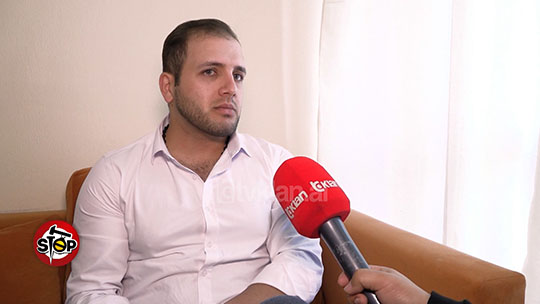
Farid Shakarami has been out of the camp for over a year and a half due to the dire conditions. But the MEK opposition, which previously opposed a savage regime, no longer allows him to meet his family.
Farid Shakarami: Good evening to all TV Klan viewers! My name is Farid Shakarami! I grew up in a family that was against the current Iranian regime. In 2009, my family and I joined the MEK organization at Camp Ashraf in Iraq. I was 16 and in a separate section of the camp with other young people, where the “brainwashing” system worked. I was inside the organization in Iraq for 8 years until we arrived in Albania in 2016. I left MEK, but my mum, sister and brother are inside the camp. Since my separation, I have wanted to see my family, but they do not allow me to see them and I am anxious about them every day as they are alone. I am not even allowed to talk to them on the phone. Here we are not in Iraq, we are in Europe, in a free and democratic country. I ask you to help me, to meet my mother. It’s true that I belong to another country, but I am a human being, and everyone needs to see their family without restriction. For over a year and a half, I can’t even hear their voices. This is my last hope and I ask you for help.

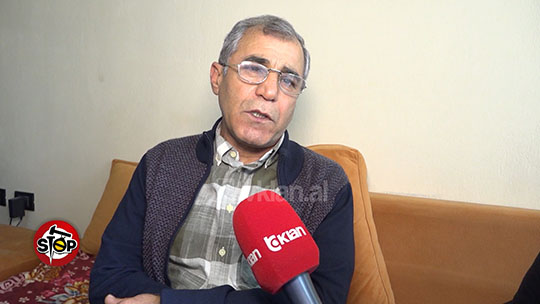
Rahman Mohammadian, meanwhile, points out the problems with MEK and the Albanian youth. He says that through the MEK members, young Albanians are being drawn into dangerous ways.
According to him, MEK is a mafia cult and chose Albania because since the country is not part of the EU, members cannot escape, and they can use them for their own purposes.
He described how Albanian children are sent to Qur’an lessons and the money they are given helps MEK. Mohammadian admitted that each member was given thousands of dollars in cash when they arrived. But he said the money is dirty and taken from Saddam Hussein.
According to him, MEK is a mafia cult and chose Albania because since the country is not part of the EU, members cannot escape, and they can use them for their own purposes.
Rahman Mohammadian: Good evening to all TV Klan viewers! My name is Rahman Mohammadian. I was with the MEK organisation for 28 years before I escaped them three years ago. One of the motives I had to join the Mojahedin was that their propaganda convinced me their ideals were for freedom and democracy. I wanted my country to have a more liberal future. But as soon as I joined, I realized that everything I had been told was the opposite. In 2015, I arrived in Albania with the MEK organization and after only 11 days escaped.
The choice of Albania by MEK was strategic, as MEK being a criminal organization, wanted a country that was not part of the European Union so that its members could not run away, and they could use them for their own purposes.
I want to explain to the Albanian people how MEK treats those who have left them. The organization does everything to prevent us from becoming 100% refugees – corrupting the Ramsa charity, the UN refugee office, and throwing us under the wheel.
I want to warn the Albanian people that MEK is a mafia cult, so you should be careful with your children! We know that your children are being used to participate in their events and demonstrations.
They are sent to Qur’an classes and the money they are given is, in fact, used to help draw your children in closer. The more time passes, the more impossible it will be to pull them out. They want to increase their power in Albania by exploiting young Albanians. This is just a mafia.
In Skanderbeg Square, some time ago, we saw with our own eyes, an Albanian family with the MEK flag in their hands, while other members filmed them in order to use the footage as propaganda to convince Albanians to take part. Don’t let this organization grow.
They have a lot of dirty money taken from Saddam Hussein, which was brought to Albania illegally. Suppose each of the 3,500 members who came to Albania was given $30,000 in cash to bring. The most trusted were given $200,000. I would also like to say that the Ramsa area dedicated to Iranian refugees has closed and we have been completely abandoned. We need help, at least to see our families here in Albania. We want to be granted work permits because we no longer have financial assistance from Ramsa. It is closed and we are completely abandoned. We need help, at least to see our families here in Albania.
In a Sky News video several years ago, Baroness Nicholson spoke of Saddam’s money and links to international terrorist organizations. One of the videos filmed by Iraqi intelligence services shows Iraqi officials giving money to MEK officials. It identifies some persons, who take large sums of money from several boxes.
“Saddam was trusting fewer and fewer people. He used MEK soldiers to transport and conceal things, including carefully transporting chemical and biological weapons. I have a lot of information from former MEK members that I have met in the region in Iraq, Iran and other places about where they have stored biological weapons”, said Baroness Nicholson.
Show host Saimir Kodra said that there are some apartments in Tirana where MEK members go to in our country and receive money which is sealed with Arabic seals. He asked the question whether this has been declared or not.
“Behind this, after all, is part of the Albanian state that has made an agreement with MEK. Of course, it has its own position, but the approach they have with the youth of the area to recruit and indoctrinate them with their ideology is not based at all on pluralism and democracy, as they claim, because the camp’s own approach is a harsh dictatorship. People who have gone out and about looking for work, the Albanian state does not recognize their right to work, no longer accepts them. It’s a huge horror. I would compare it to Mauthausen [Concentration Camp] in that whoever goes in there can’t get out anymore”, Kodra said.
/tvklan.al
TV Klan, Translated by Iran Interlink
In this documentary Mr.Bashiri narrates the story of his life and how he lost his wife…
My name is Alireza Bashiri. I was born in Ahwaz. I am 52. I live in Sweden with my daughter and her son.
After marriage, I told my wife that I’d like to go abroad and live in another country
My wife was just 17 and myself around 22 or 23. I didn’t have that much experience. We decided to go to Europe from Turkey. We went from Turkey to Germany. We sought asylum.
We spent around 2 years in a refugee camp.
The MKO members were very active there …
Open letter to Koen Geens, Minister of Justice
To the Honourable Koen Geens, Minister of Justice,
My name is Reza Jebelli. I am an ex-member of Rajavi’s cult and a human rights activist in Brussels.

As you are aware, every year the Mojahedin-e Khalq (MEK) cult brings many undocumented people from all over Europe to their annual gathering in Paris, but this year the French authorities denied the MEK’s request for such event. Instead the MEK are planning to celebrate their June 1981 glorification of Armed Struggle against Iranians in Brussels on the 15th June at Schuman Square between 15h to 18h.
As I indicated in my previous letter to you, in 2003 French anti-terrorism officers raided a dozen locations northwest of Paris in Auvers-Sur-Oise, the MEK headquarters – classified as a terrorist organization by the United States, the European Union and Iran (1997-2012) – and initially detained 165 people along with MEK leader Maryam Rajavi who immediately after her arrest ordered a few members to commit self-immolation in the streets of Europe. The attempts at self-immolation to protest against the arrest of Rajavi are proof of a fanatical and terrorist mindset that does not respect our laws and our values.
On December 12, 2017, when Maryam Rajavi the leader of the MEK was in the European Parliament, two former MEK members who were invited to participate in a conference in the parliament were attacked and injured by Rajavi’s bodyguards who tried to kidnap Mr Khoshal and Mr Ebrahimi from right in front of the parliament.
Mr Khoshal was attacked by MEK operatives when attended EU Parliament in Brussels to give evidence
Dear Minister Geens,
As I am writing to you, MEK operatives are deceptively trafficking many refugees from various camps all over Europe and the Balkans region to Brussels for their Armed Struggle gathering by claiming that it is for freedom and democracy and are deceiving the authorities in the same way to obtain permission for this rally.
When I read the testimony of Amber Scorah, a former member of Jehovah’s Witnesses, I understood that, in many respects the methods used resembled those used by the MEK. But the MEK are worse because they are the source of Middle East Islamic Marxist Terrorism. The Mojahedin are known to have assassinated six American in 1970s during their first suicide attacks against US servicemen and contractors in Tehran, the Iranian capital.
The MEK’s 40-year record of behaviour does not substantiate its capability or intention to be democratic. Internally, the MEK run their organization autocratically, suppressing dissent and eschewing tolerance of differing viewpoints and they have no respect for the rule of law.
Rajavi, who heads the MEK’s political and military wings, has fostered a cult of personality around herself. These characteristics have alienated most Iranian expatriates, who assert they do not want to replace one objectionable regime for another.
The MEK has no viable chance of seizing power in Iran. If the current government is not Iranian’s first choice for a government, the MEK is not even their last.
Dear Sir,
Following my letter in December 2017 about the MEK’s attack on ex-members in front of the European Parliament and considering the MEK’s past forty years record of assassinations and terrorist activities in Iran, Iraq and Europe and as a former member, I must emphasize that MEK’s presence in Belgium is and will be one of the greatest threats to our country and the European Union.
After France has rejected them, they are now trying to transfer their base to our city, and they have already relocated some of their members from Albania and France to Brussels.
I would like to draw your immediate attention to this matter and suggest that by rejecting the presence of this terrorist cult in Belgium and cancelling their call for violence from inside this country, you will also send a strong signal that Belgium has ZERO tolerance policy for all terrorists under any name.
Respectfully,
Reza Jebelli
The Trump Administration’s Iran Fiasco
Pompeo tries to please his boss, while Bolton pursues a corrupt and dangerous escalation.

Until recently, what passed for “Iran policy” in the Trump administration originated in the president’s obsession with his predecessor. If President Barack Obama was going to open dialogue with the Islamic Republic, then this president would shut it down, and return to 40 years of futile exchanges of threats, insults, and accusations.
If President Obama and five other nations made an agreement (the Joint Comprehensive Plan of Action, or JCPOA) to limit Iran’s nuclear program in exchange for limited sanctions relief, then this president would tear up the agreement, ignore our partners, and impose more sanctions. Trump disliked the JCPOA not because of anything in it, but because Obama had made it, and he—the world’s greatest negotiator—had not.
Trump’s new secretary of state, similarly named to the ill-fated Roman triumvir Pompeius Magnus, understands his chief’s obsessions very well. At a January 2019 speech in Cairo, where ten years earlier President Obama had spoken of a “new beginning” with the Muslim world, Secretary of State Mike Pompeo shocked his audience and flattered his boss by publicly trashing Obama’s efforts to find a more productive diplomatic path with Iran. He did the same at a May 11 Claremont Institute event, continuing to denigrate his predecessors’ work and claiming, in a message to State Department employees, that “now we’re back to where we should be—more clear-eyed than ever.”
Pompeo’s pointless fulminating against Iran has at least the motivation of flattering his boss and feeding the president’s fixation with his predecessor. There is no policy goal except to be self-righteous. There are no means except denunciations, ultimatums, and insincere expressions of sympathy for ordinary Iranians. In a strange twist, in a July 2018 Reagan Library event, the secretary accused the Iranian leadership of being a “mafia.” I guess Pompeo doesn’t do irony.
Feeling good and flattering the boss may not be the most worthy objectives of an Iran policy, but they are at least understandable—and have nothing to do with Iran.
Our secretary of state seems to care nothing for history. He shows no knowledge of or interest in what has led to today’s U.S.-Iran impasse, which could now escalate into open warfare through misreading the other side’s actions. Nor is there any sense that diplomacy can achieve what 40 years of chest-beating has not. There is no talk of “open doors,” mutual interest, or win-win outcomes. The only thing offered to Iranians is surrender.
Nor does Pompeo have any appreciation for the ignorance, deception, greed, and self-interest that led the United States into earlier fiascos in Vietnam and Iraq. Those misadventures have done irreparable damage both to those unfortunate countries and to American society. As a West Point graduate and former U.S. Army officer, he should be at least aware of the lies and incompetence that sent his fellow soldiers to Vietnam and killed and maimed so many there. The U.S. Army is famous for conducting “lessons learned” reviews whether operations go well or badly. Was Pompeo paying attention to the session on Vietnam? On Iraq? Is he going to remain silent or be a cheerleader while events with Iran follow a similar path into a swamp?
But one cannot accuse National Security Adviser John Bolton of having no goal with Iran. His goal is clear: the downfall of the Islamic Republic, by war if necessary, and its replacement by his paymasters, the bizarre cultists of the Mujahedin-e-Khalq organization, or MEK.
The group, whose logo features a red star, a Quranic verse, and a rifle, began in the 1960s as so-called “Islamic-Marxists.” With a militant, anti-American reinterpretation of Shia Islam, they fought alongside Ayatollah Khomeini against the Iranian monarchy. Two years after the revolution, the Islamists in Khomeini’s coalition turned on the group and crushed it after bloody street battles and assassinations.
Following those defeats, the MEK transformed itself into a bizarre cult, with an ideology combining the practices of Jonestown and the Khmer Rouge. Today it would be only a historical curiosity with a few aging followers if it had not invested so much and so wisely in Bolton. Despite the MEK’s dubious past, including terrorism against Americans and support for the 1979–1981 occupation of the U.S. Embassy in Tehran, it has an even more dubious present, with welfare fraud, forced divorces, self-criticism sessions, and a range of other cult practices. As odious as it is, its paid shill now occupies one of our country’s highest national-security positions.
The MEK pays its speakers generously. Figures range from $25,000 to 50,000 and sometimes more. Since Bolton, by his own admission, has been speaking for the group for at least ten years, he has made serious money—around $180,000 by one estimate. His most recent financial disclosure includes a $40,000 payment for a 2017 speech he delivered at an MEK rally in Paris.
The group’s success—despite its aberrant beliefs—is testimony to the power of money spread generously. The MEK has bought support from bipartisan quarters. Its paid American cheerleaders include a former House Speaker (Newt Gingrich), a former cabinet secretary (Bill Richardson), retired generals (Jim Jones, Peter Pace), a former mayor of our largest city (Rudy Giuliani), and a former governor of one of our most progressive states (Howard Dean). They have spoken both at rallies in Europe and at events in Washington.
The MEK has made no secret of its goals: to provoke a war between the U.S. and Iran. In the aftermath, it calculates it would move into the wreckage and pick up the pieces.
I recently spoke about the group and its influence to a highly educated audience in Washington—graduates of three of the world’s best universities. Most of the Americans present were unaware of the MEK and its payments to the bellicose national security adviser. All of the Iranian Americans at the meeting, however, knew the group well and detested it. They knew its murderous history in Iran: They knew that in 1979–1980 it supported Iran’s religious extremists in their campaign to silence voices calling for democracy and women’s rights; they knew it called for more executions in the early days of the revolution; they knew it fought alongside the hated Iraqis during the long and bloody Iran-Iraq war; they knew it even launched an armed invasion of Iranian territory in 1988—an invasion stopped with heavy losses.
Although the Iranian Americans present expressed no love for the rulers of the Islamic Republic, they knew that an MEK-ruled Iran would be far worse. It would bring them all the horrors of Stalinism—gulags, one-man (or -woman) rule, confiscations, and executions for being a member of the wrong social class. The current regime has killed thousands. The MEK would kill millions.
By all reports, much of Iran’s population—whatever its view of the Islamic Republic—shares this deep hatred of the MEK. Most Iranians are not deceived by its claims of being democratic. They know its history.
A U.S.-Iran war would inflict heavy damage on Iran’s infrastructure, economy, and population. It would also involve Americans in yet another fiasco in the Middle East. We would again find ourselves in a quagmire that would make Iraq look simple. We should reject the self-serving assumption that military action against Iran will be easy and without cost. It will be neither.
Finally, we must never stop asking, “Who is pushing for war with Iran and why?” The answer should make it very clear we have no business provoking this conflict to serve the interests of an Iranian cult and its paid spokesman.
John Limbert, prospect
Imagine terrorist extremists attacking European citizens, cutting their throats with knife, breaking their hands, removing their eyes with fingers, and tearing their mouth open. Even imagining such scenes seems horrific but there are some people out there who have been trained to do so. A large group of these trained terrorists are members of the Mujahedin Khalq Organization (the MKO/ MEK/ PMOI/the Cult of Rajavi). Coincidently, they live in Europe now.
The recent report published by Der Spiegel revealed the above-mentioned horrific facts about the evil of the MKO. The history of the MKO has proved that committing such violent acts is not far from the background of the group. There are numerous reports and testimonies on the MKO’s armed and unarmed violence. Today, there are hundreds of people in the MKO camp in Albania who have been trained to commit these evil deeds whenever they deem them necessary. One may wonder what makes such brutal trainings as ordinary routine choirs of a community.
The German born prominent philosopher Hannah Arendt is best known for her works on the problem of “evil”. Can one do evil without being evil? This was the puzzling question that she grappled with when she reported for The New Yorker in 1961 on the war crimes trial of Adolph Eichmann, the Nazi operative responsible for organizing the transportation of millions of Jews and others to various concentration camps.
Arendt was remarkably sensitive about some of the deepest problems, confusions and dangerous tendencies in modern political life, many of them still with us today. The suffocating atmosphere of the MKO camps –where members have to pressure their peers abusing them verbally and physically in their everyday life and are always prepared to attack outsiders —is a significant example of complex and dangerous tendencies within a community in the modern world.
Arendt believes that all aspects of the life under the totalitarian ruling systems are controlled by the totalitarian leaders. The evil of the dictatorship leads the followers to an abyss in which they practically lose their mental power. According to her, conscience of the citizens in a dictatorship is paralyzed; they lose their individuality.
This process has been the exact mechanism that has been used in the MKO.
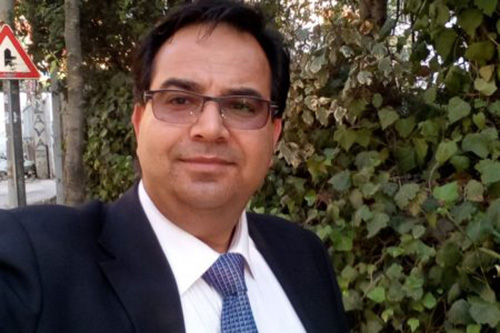
The most recent defector of the MKO in Albania, Hadi Sani Khani admits that once he was an MKO member, he was like a robot, not able to choose for a moment of his private life. “We were brainwashed in daily meetings, our minds had to be drained of any personal thoughts during daily and weekly brainwashing sessions,” he says.
Actually, totalitarianism has sickened members in a dangerous way that they submit to the decisions that the dictator (in this case Massoud Rajavi) makes for them. Members believe in what the top of the hierarchy says. They think that Massoud and Maryam Rajavi are protectors of their rights and interests. “Massoud Rajavi was idolized like a prophet, a god for us,” Sani Khani says.
Hanna Arendt thinks that the evil-seized members are in return the factors to consolidate the absolute power of the dictator. “In politics obedience and support are the same”, she suggests. To break this awkward equation, she suggests a deep inner conversation that awakes the individuality of the citizen.
Those who defect the MKO definitely had experienced the unique moment that they gained the ability to have this inner conversation. This special moment is usually declared in the firsthand accounts of former members’ testimonies. For instance, former member of the group Bahman Azami, speaks of the moment he saw some children playing in the park over the walls of the MKO’s camp in Tirana, Albania. The kids took his mind to the life outside the group. He was eventually punished by his female commandant for he had broken the regulations of the cult that forbids thinking about normal life. However, the inner conversation had started for Bahman. He started doubting the group’s cause questioning himself for all the years of his life he had lost in the group and he finally left the group.
Although Massoud and Maryam Rajavi have been making efforts to remove the past and future of their followers’ lives in order to conquer their minds, we should always be hopeful for the advent of that particular moment that revives past memoirs and experiences in their minds and hearts that will inspire their willingness for a normal future.
Mazda Parsi
The revelations recently made on the Mujahedin Khalq Organization (the MKO/ MEK/ PMOI) by Der Spiegel, resulted in two kinds of reactions. As usual the first was made by the group’s propaganda media that tried to accuse the Spiegel correspondent Luisa Hommerich of being the mercenary of the IRI assuming her report as an attempt to launch misinformation about the group.
Eventually, the second group that included former members of the group came to the scene to endorse the testimonies of other former members that were interviewed by Hommerich for its investigative report.
Among the many articles written by former members of the MKO such as Musa Damrudi, Hanif Heidarnezhad, Ann Khodabandeh and Ali Shirzad that integrated Hommerich’s article, that of Mohammad Razaghi is worth to consider seriously because of the detailed and completing endorsement that he provides for the original report.
The German correspondent cites from defectors of the group that members of the MKO are subjected to physical and mental tortures. The most horrific part of the report cites the interviewees as saying that the residents of the MKO camps regularly practice “cutting throats with knife”, “breaking hand”, “removing eyes with finger” and “tearing down mouth”. Mohammad Razaghi confirms the testimony and explains that such kind of trainings had been originally instructed by Iraqi officers to the MKO operatives when the group was located in Iraq.
“As a person who was a member of the MKO for 20 years, I have enough information on the terrorist nature and the mafia structure of the group,” he writes in his open letter to Luisa Hommerich. “Ms. Hommerich, I would like to say that your report is correct but incomplete.”
Razaghi asserts that the trainings of “cutting throats with knife”, “breaking hand”, “removing eyes with finger” and “tearing down mouth” that are accomplished in the MKO camp in Tirana are actually the practice of killing people without an arm. “Officers of Saddam’s special guard used to teach these technics to the MKO’s high ranking members.”
Razaghi writes of further trainings that the MKO members received in Iraq. “In addition to the trainings you stated in your report, Iraqi officers used to instruct them to make firing bombs, destructive bombs and sound bombs with the very accessible items that they can by in their local markets,” he avows.
Razaghi warns about the potential of the MKO members who have received such horrific trainings.
“Once the creators of such destructive bombs were gathered in the notorious Camp Ashraf but today they are in most European countries living in the group’s safe houses,” he writes.
Razaghi ends his testimony promising Hommerich to reveal more information on the dangerous nature of the MKO in case he would be able to visit her.