-
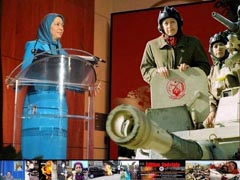
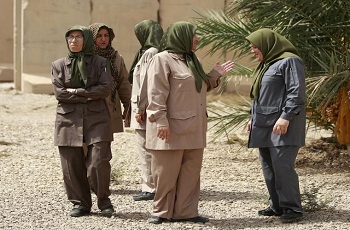
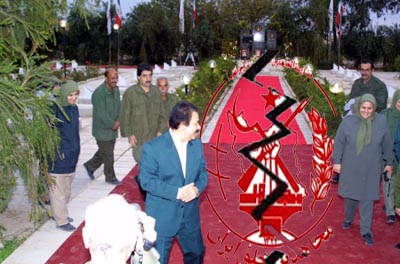
- Wearing Hijab is mandatory within the MEK affairs despite the cult leader’s claims.

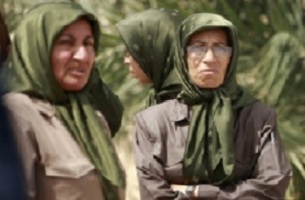
- All the women have to wear the type of Hijab the Cult leaders dictate to them; Scarf.
- Female members of MEK are ought to wear exactly the same uniforms. They are not allowed to choose their own clothes’ color; all the women have to wear Khaki uniforms and red or mud-colored head scarves.
- Female members are banned from applying any form of cosmetics even sunscreen crème.
- Before the Ideological revolution and forced celibacy the women were forced to marry whoever the organization would decide.
- Women in MKO Camps have not been allowed to step in Iraq’s public alone for at least 25 years.
- A large number of female members of MEK became infertile through hysterectomy calling the “Ideal Summit Operation”.
- A large number of female members are manipulated to be abused sexually by the Cult leader; Massoud Rajavi.
- Female members are forced to dedicate all their mind and heart to the cult leaders.
- Female members were deceived by the cult leader to attend a ceremony called “Salvation Dance” in which the women had to dance naked in front of their guru; Massoud Rajavi.
- Women are deprived from experiencing the feeling of motherhood since having child is forbidden within the Cult of Rajavis.
- Women are deprived from marital life.
- Wearing Hijab is mandatory within the MEK affairs despite the cult leader’s claims.
Women Rights in the Mujahedin Khalq
November 25th is the International Day for the Elimination of Violence against Women which hits its 15th anniversary this year. Violence against Women (VAW) is a grave violation of human rights but its notion has always been abused and misused by the leaders of the Mujahedin Khalq Organization (the MKO).
The impact of women’s rights abuse ranges from immediate to long-term multiple physical, sexual, and mental abuses, including death. It negatively affects women’s general well-being and prevents women from fully participating in society. Violence not only has negative impacts on the victims but also on their families, the community and the country at large. As a result of these abuses, women are facing grave consequences in the MKO.
Based on the testimonies of former female members of the group, women in the MKO camps every day experience a large range of violence including forced marriage, forced divorce, mandatory celibacy, forced sterilization, sexual slavery and forced labor.
Violence against women which is carried out in the MKO is covered under the guise of feminism. Women in the MKO are called “heroines” and “examples of progressive women” but in reality, they are taken as hostages in a modern slavery system.
Despite the severe situation of women in the MKO, the group launches a huge propaganda against Islamic Republic on what it calls violence against women. Acid attacks in Isfahan, Iran gave the group a new pretext to accuse the Iranian government of violating women’s rights. Although I condemn acid attacks on my country fellow women under any circumstance, I should mention that the record of abusive cases in the MKO by its leader against the group members, particularly female members, is much more severe than the eight cases of acid attacks in Isfahan.
Nasrin Ebrahimi is a former member of the Mujahedin Khalq Organization, who fled the group in 2006. She was one of the first survivors of the Cult-like MKO who dared to reveal the corruption of the leaders of the group. She was the first person to speak of the “Ideal Summit Operation” which was a cult jargon through which a large number of female members of the group became infertile by Hysterectomy. [1]
Batoul Soltani, who was a Mojahedin-e Khalq Organization (MKO) member for 20 years and was promoted to the rank of the leadership council of the terrorist organization, told Press TV that individuals in the Mojahedin-e Khalq cult should reach what the organization sees as a peak by cutting all their links with the outside world. [2]
Women in the MKO who allegedly reach the “Ideal Summit” by removing their wombs and becoming infertile were since then nominated to get raped by the leader Massoud Rajavi. Former leadership and board member of the MKO, Mrs. Zahra Mir Baqeri, confirmed that 95 women were exposed to the process of hysterectomy and being raped by order of Massoud Rajavi and Maryam Rajavi. Mir Baqeri proposes a list which includes the names of 95 of the female members of the MKO who went through hysterectomy under various pretexts and deceptive excuses. [3]
The most detailed report on VAW committed in the MKO, “Comrades in Arms” was broadcast by Press TV. The documentary discloses how harshly Massoud Rajavi abuses women who were “Looking for a brighter future” so that they “ended up in Camp Ashraf, where a fate worse than death awaited them.”[4]
Testimonies of the three women interviewed in this documentary indicates that love, marital life and having children is forbidden for everyone living in the group. Moreover, all women should think of Massoud Rajavi as their husband. Nasrin Ebrahimi tells Press TV, “Maryam Rajavi used to hold many meetings for us, very long meetings. She would hold many meetings especially for women. She said, “We women all have only one husband who is Masoud Rajavi.” She even said, “You have the most handsome and the best man in the world. So what’s wrong with you?”[5]
Vocal revealer of Rajavi’s sexual corruption Batoul Soltani describes how women were manipulated to sleep with Massoud. Although she could not believe his eyes she was one of the victims of rape by the leader. She says in the film:’ “I could never imagine that her words would be put into practice someday and I would have to sleep with Massoud. I really thought that it was merely an ideological discourse. As for Maryam Rajavi herself, I couldn’t imagine that Massoud had sexual relationship with her. I couldn’t imagine it.”[6]
Compared with acid attack against a few women–which is deplorable and not acceptable at all— and executions in Iran, cases of VAWs carried out in the community of 900 women in the MKO are very crucial. The MKO propaganda on the alleged women rights abuses in Iran is used as a cover up for the massive violation of women rights in their own small cult-like community.
Mazda Parsi
References:
[1] FNA, the Ideal Summit Mujahedin Khalq makes women unfertile, October 15, 2008
[2]Press TV, Hysterectomy, latest MKO cult strategy, Oct 21, 2008
[3]Ashraf News, Zahra Mir Baqeri: 95 women were subject to hysterectomy at Camp Ashraf, December 27, 2012
[4]Press TV, Comrades in Arms, Dec 01, 2014
[5] ibid
[6] ibid
Discovering Iran
Iran Trip: September – October 2014
Marcel Proust said: “The voyage of discovery is not in seeking new landscapes but in having new eyes.” During
the past two decades, I visited Iran on numerous occasions staying 10-14 days at a time. This time around, I stayed for 2 months and, heeding Proust, I carried with me a fresh pair of eyes. I discarded both my Western lenses as well as my Iranian lenses and observed with objective eyes. It was a formidable journey that left me breathless.
Part I – Women of the Islamic Republic of Iran
It is hard to know where to start a travel log and how to describe a newfound world in a few pages. However, given the obsession with the status of women, it is perhaps appropriate to start with the women in Iran as I perceived them.
Western media with help from feminists and Iranians living outside of Iran portray Iranian women as being “oppressed”—foremost because women in Iran have to abide by an Islamic dress code: hijab. Yes, hijab is mandatory and women choose to wear either a chador or a scarf. But what is crucial to understand is the role chador played pre-1979 versus the post Revolution era.
Prior to the 1979 Revolution, the chador was indicative of a thinly veiled caste system. While a few distinguished women of high socio-economical background chose to wear the chador, the rest, the majority of Iranian women, were simply born into the habit. In short, the socio-economically disadvantaged wore the pre-1979 chador. In those days, the chador was a hindrance to a woman’s progress; she was looked down at and frowned upon. She could not move forward or up. She was oppressed. But Western feminists were blind to this oppression. After all, the Shah was modern and America’s friendly dictator.
The Revolution changed the status quo and chipped away at the caste system. A revolution, by definition, is a complete change in the way people live and work. And so it is with the Iranian Revolution. The post 1979 chador is no longer an impediment to a woman’s future. Today’s Iranian woman, the same (formerly) less privileged class, has found freedom in her chador. She has been unshackled and she marches on alongside her (formerly) more privileged colleagues. This emancipation is what the Western/Westernized feminists see as oppression.
I myself come from yesterday’s tiny minority of “privileged” women, far too comfortable in my “Western” skin to want to promote hijab, but I will not allow my personal preferences to diminish the value of the progress made because of hijab. The bleeding hearts from without should simply change their tainted lenses instead of trying to change the lives of others for Iranian women do not need to be rescued, they do not follow—they lead.
On two separate occasions I had the opportunity to sit and talk with a group of PhD students at Tehran University’s Global Studies Department. Frankly, these young women charmed me. Their inquisitive and sharp minds, their keen intellect, their vast knowledge, their fluent English, and their utter confidence dazzled me. Western feminists would consider them “oppressed”. Seems to me that feminism needs rescuing, not Iranian women.
The inordinate success of women goes vastly beyond education; they participate in every aspect of society: motherhood, arts and sciences, high tech, film and cinema, research, business, administration, politics, sports, armed forces, bus and taxi drivers, fire-fighters, etc. Women’s active role in society is undeniable. What I found tantalizing was their role as cultural gatekeepers.
Women – The Cultural Warriors
Cultural imperialism is part and parcel of neocolonialism. The eradication of an indigenous culture and replacing it with a hegemonic one enables the hegemon to exert influence on the subject nation—to own it. And women are the nuclei. They hold the family together and pass on traditions. To this end, in every colonial adventure, regardless of geography, women have been the primary targets (i.e. victims of rescue). Iran has been no different. While some have indeed abandoned their culture in order to embrace that of another, the vast majority have resisted and fought back with authentic Iranian tradition.
One group of these cultural warriors left a deep impact on me. I attended a dance ensemble at the famous Roudaki Hall (Talar Roudaki). Girls aged 6 to 18 sent the packed hall into a thunderous applause when they danced to various traditional songs from around the country. Their dance was not MTV stuff. It reflected the beauty and purity of an ancient culture. Their movements and gestures were not intended to be seductive, they were graceful and poetic ushering in the ancient past and bonding it with the present, strengthening it. These were the women of Iran who would guard Iran’s precious culture and traditions against modern, Western culture deemed central to ‘civilization’ and ‘freedom’ by Western feminists.
It is not my intention to give the false impression that every woman in Iran is happy, successful, and valued. Like any other society, Iran has its share of unhappy, depressed girls and women. It has its share of women who have been abused and betrayed. It has its share of girls and women who turn to drugs, prostitution, or both. I came across these as well. I also noted that laws in Iran do not favor women, be it divorce, child custody, or inheritance. Yet women have leapt forward.
Part II – Esprit de Corps: Washington Just Doesn’t Get It
Numerous visitors have travelled to Iran and brought back reports describing the landscape, the food, the friendliness of the people, the impact of the sanctions, and so forth. For the most part, these reports have been accurate—albeit incomplete. I do not want to tire the reader with my observations on these same topics; rather, I invite the reader to share my journey into the soul of the country—the spirit of the Iranian nation.
Washington’s missteps are, in part, due to the simple fact that Washington receives flawed intelligence on Iran and Iranians. This has been a long-standing pattern with Washington. Prior to the 1979 Revolution, a plethora of US personnel lived in Iran. Thousands of CIA agents were stationed there. Their task went beyond teaching torture techniques to the Shah’s secret police; they were, after all, spies. In addition to the military personnel that came in tow with the military equipment sold to the Shah by the U.S., there were official US personnel who worked at the American Embassy in Tehran. None got it.
They all failed miserably in their assessment of Iranians. These personnel were simply too busy enjoying a lavish lifestyle in Iran. As the aforementioned travellers have all repeated, Iran is beautiful, the food scrumptious, the people hospitable. These personnel attended parties thrown by those close to the Shah (or other affluent Iranians) and lived the kind of life they could not have dreamt of elsewhere. American ambassadors doled out visas to the lazy kids of these same families who would not have otherwise been able to make it to the US under normal student visa requirements.
These same Iranians, the privileged elite, provided Americans in Iran with intelligence—inaccurate, flawed information that was passed onto Washington. Washington was content. After all, why doubt your friends, and how could possibly the secret police trained by CIA not get the facts right? To this end, Washington believed Iran would remain a client state for the unforeseen future. The success of the revolution was a slap in the face, but Washington did not alter course.
For the past several decades, Washington has continued to act on flawed intelligence. Today, it relies on the “expertise” of some in the Iranian Diaspora who have not visited Iran once since the revolution. In addition to the “Iran experts”, Washington has found itself other sources of ‘intelligence’, foremost; the Mojahedeen Khalg (MEK) terrorist cult. This group feeds Washington information provided them by Israel. Previous to this assignment, the cult was busy fighting alongside Saddam Hussein killing Iranians and Kurds. Is it any surprise that Washington is clueless on Iran?
What Washington can’t fathom is the source of Iran’s strength, its formidable resilience. Thanks to its ‘experts’, and the personal experience of some visitors, Washington continues to believe that the Iranian people love America and that they are waiting for Washington to ‘rescue’ them from their government. No doubt Iranians are generous, hospitable, and charming. They welcome visitors as guest regardless of their country of origin. This is part and parcel of their culture. They also believe a guest is a ‘blessing from God’—mehmoon barekate khodast. Karime khodast. But this is where it ends.
While the Iranian people love people of all nationalities, including Americans, they see Washington for what it is. Over the past decades, Washington and its policies have adversely affected virtually every single family in Iran. These include those whose dreams and hopes were shattered by the CIA orchestrated coup against their nascent democracy and its popular leader, Mossadegh. Later, lives were turned upside down the Shah’s CIA/Mossad trained secret police arrested, brutally tortured, killed or simply made disappear anyone who dared venture into politics. Thanks to America’s staunch support, these stories never found their way to the papers. And then there are the millions of war widows and orphans, the maimed soldiers, the victims of chemical weapons supplied to Saddam Hussein by America to use against Iranians while the UN closed its eyes in an 8-year war. Not to forget the victims of American sponsored terrorism, and sanctions. Millions of Iranians have first hand experience of all that has been plagued upon them by Washington.
It is these victims, their families and acquaintances that fight for Iran’s sovereignty, that are the guardians of this proud nation. They are the source of Iran’s strength. Victor Hugo once said: “No army can withstand the strength of an idea whose time has come.” There simply is no army on earth which can occupy, by proxy or otherwise, the land the people have come to believe belongs to them not by virtue of birth, but because they have fought for it, died for it, kept it from harm.
I met many such families; one in particular was more memorable. During the Shah’s regime, this family worked on my father’s farm. The father and his sons worked the farm and the mother helped around the house. In those days, this family and future generations would have simply continued to work on the farm, remain ‘peasants’ with no prospects for the future. But the revolution rescued them.
Shortly after the revolution, the war started. The boys in the family all went to war. One uncle lost his life to chemical warfare. The rest survived – and thrived. They got themselves free education provided by the same government America wants to dislodge. One of these boys, the man I met after some 35 years, Kazem, once condemned to be a ‘peasant’, had become a successful businessman. I spent hours talking to the family and to Kazem in particular. What impressed me was not just his affluence and his success in business, but the wisdom that only comes with age, and yet he had acquired it in youth. He had intellect and dignity. A gentleman, I found his knowledge of global affairs to be superior to most one would meet at a college in the US. He had experienced war and witnessed death. Iran belonged to him. He would fight for it over and over without hesitating to die for it.
This is the Iran the Diaspora has left behind, the Iran that is unknown to them. This is a far superior country than the one I left behind as a child and visited throughout the years. Iran’s guardians, its keepers, are all Kazems. It has been said that the strength of an army is the support of the people behind it. The whole country is that army. As Khalil Gibran rightly observed: “Out of suffering have emerged the strongest souls; the most massive characters are seared with scars.” With every wrong policy, America adds to the scars, strengthens the character and spirit of this unbreakable nation. This is what Washington is not able to grasp.
Foreign Policy Journal
The recent order by Maryam Rajavi the co-leader of the Mujahedin Khalq Organization to her assistant in Camp Liberty is definitely a new masquerade show to entertain the individuals inside the group, particularly female members.
According to the new order which was published in form of a letter to Zohreh Akhyani the first official of Camp Liberty, she is ordered form what Maryam Rajavi calls “Central Council” made of a “Thousand Heroine”. She gave her agent in liberty an eight-month deadline to form the so-called council.
According to many reports, the number of female members of the MKO is about nine hundred. Regarding that during the past decade a large number of the group members –of which some were women– managed to leave it and another large number died or were killed in clashes with Iraqi forces, the number of women in liberty could hardly ever be more than the reported digit, 900, even if the group’s fraudulent recruiters have been able to recruit new female members. However, the latter is very improbable.
Let us imagine that there are really a thousand women in Liberty, another miscalculation would emerge. According to Maryam’s order, members of the Central Council should be elected by their “competency” and “majority of the votes”. What sort of elections does Maryam Rajavi think of? Electing a thousand heroine of a thousand women! So what about the competency of the elected ones? What does majority of votes mean in her doctrine?
Let us imagine that a fair election is launched and then a thousand female members get the title of “Members of Central Council”, so what? What is the function of this council? What is the difference of “Central Council” one with the “Leadership Council” which was formed by Massoud Rajavi and included only female members?
Based on testimonies of disaffected female members of the MKO’s Leadership Council, all women in the MKO pass the hierarchy and become a member of the Leadership Council someday.
Mrs. Batoul Soltani was member of the so-called Council. She could release herself from the cult-like structure of the MKO after she witnessed corruption of the MKO authorities. As a member of the elite council she was made to sleep with the leader of the MKO cult of personality, Massoud Rajavi. According to Batoul, when she left the cult near a decade ago the number of members of the Leadership Council was six hundred! This number must have raised to a much higher level during the past decade.
Six hundred members in the Leadership Council of a group that the number of its entire members –male and female– hardly ever mount to 4 thousand people and every year several people escape its cult-like, suppressive and violent structure. And now Central Council again consisted of women whose roles and functions are not clarified in the entire letters of Maryam Rajavi and Zoreh Akhyani.
The new show of the Cult of Rajavi is absolutely used to manipulate individuals who are taken as hostages in the cult. It is also a new entertaining program to keep them busy-minded. Not only it does not get any attention in the outside world but also it looks disgusting.
Rajavi is not so creative to misuse the recent acid attacks in Iran. She seeks to find a way to show off her nonexistent feminist ideas!
The truth about the conditions of women in the MKO camps is abuse, abuse, abuse!
The Thousand Heroine of Liberty are banned from love, marriage, having children….Their everyday life is tightly controlled by the cult system. They are not free to choose their covering style, their eating style, their timing for sleep, work and etc. They have to report all their acts and thoughts to their superior official. Some of them have become barren after the leader ordered a mass Hysterectomy surgery. At last some were sexually abused by Massoud Rajavi after a mass marraige!
This is the story of a Thousand Heroines of the MKO.
Mazda Parsi
From Stealing Flowers to Sexual Abuses
The reports and documents published on the MKO camps, demonstrate that morality has been deleted from the group’s internal relations.
Morality is defined as a particular system of values and principals of conduct, especially one held by a specified person or society. It gives the person or society the extent to which an action is right or wrong. In a moral-based society people obey moral and human values including helping others, offering sympathy to others, being honest, being polite… These do’s and don’ts are less or more practiced and respected in normal societies.
Nonetheless, in the Cult of Rajavi (the MKO) from the peak of the cult’s hierarchy – where Massoud Rajavi stands – moral values have been violated and even confused with immoral values.
For instance, marriage, maternal love, family life are regarded by the MKO leaders as counter values. In turn, polygamy, treason and divorce –that are usually considered as counter values– are recommended values in the Cult of Rajavi. The leader of the MKO is able to marry as many wives as he wants – up to the number of the Cult’s Elite Council, about 600 women. He can sleep with all of them while male members of the group are not allowed to marry or even to think of the opposite sex otherwise they are humiliated and punished by the cult system. Not only polygamy is considered a value but also dishonesty of the cult leader is viewed as an ordinary.
The most recent case of immoral acts in the MKO was covered by French media. Last week, French newspaper Le Figaro reported that plant pots decorating graves in a cemetery in Auver Sur d’Oise were found in the MKO base. “The 59 year old widow followed the path of the plant on her computer. Imagine her surprise to find that the floating plant came to rest in the premises of the NCRI, based in Auvers since 1980,” reported Le Figaro. The French newspaper also reported that besides the hydrangeas other plants were found that might have been stolen from other graves in the cemetery, where such disappearances have intensified over the past year despite the precautions taken by the municipality.
The news of the new Rajavi’s scandal was widely covered by former members of the cult. It was followed by numerous cases of memoirs and experiences of former members about stealing objects for the group. Former senior interpreter of the MKO, Ghorban Ali Hossein Nejad recited that stealing goods was called “Liberating” in the MKO.
He believes that robberies by cult members should be measured as “ideological” because they are indoctrinated by Massoud and Maryam Rajavi and their Machiavellian ideas that justify every means to get the goal.
In ex-members memos and evidences you read about all sorts of stolen items from Iraqi tanks and artilleries for the MKO army to suits and ties for the group’s gatherings. The whole stories indicate the awful decline in values in the cult of Rajavi. Defectors recall that at that time they were proud of their immoral acts.
Furthermore, as we witness the evidences of female defectors such as Batoul Soltani, we realize that every women who was more dedicated to Rajavi’s sexual desires was more admired and more glorified by the cult leaders. This was definitely the outcome of the manipulative indoctrination structure of Massoud Rajavi’s cult of personality. The lust of the MKO authorities for absolute obedience of members prompts them to suggest he evil as good.
By the way, the stolen plant that made a French citizen sue the MKO might be a very small step to counter the huge immoral and inhuman acts of the MKO leaders but it is an indicator of collapse of morality in a group that when its leader was arrested by French Police in 2003, millions of dollars were found in her base.
It is a pity that more crucial crimes and counter values practiced in the MKO are ignored by the international community. Leaders of the group are not brought to justice for their inhumane acts. There are countless records and documents of these cases of abuses in the MKO but they have not been investigated seriously by judicial bodies yet.
Mazda Parsi
Women’s right around the world today is an important indicator in understanding a civilized country. Many may think that women’s rights is only the issue in religious countries while it is actually a global issue. However, the
problem is improving across the world but there are still a lot of women who have to struggle to achieve it. For instance, women who have been recruited by destructive cults such as the Mujahedin Khalq Organization (the MKO) are good examples of how women are being treated unfairly. The cult of Rajavi (the MKO) which is governed by kind of modern slavery system deprives female members from their fundamental freedoms and rights.
Nevertheless, the MKO propaganda tries to demonstrate a modern democratic portrait of a viable alternative for the Iranian Government while in reality it practices discrimination and violence against its female members. The new documentary published by Press TV proves just the opposite of what their propaganda claims. “Comrades in Arms” unfolds the story of those women who fell for deceptive slogans of the MKO. Looking for a brighter future these women ended up in Camp Ashraf, where they faced a gloomy fate.
The testimonies of three interviewed women who are interviewed in the documentary severely challenge very special page on Maryam Rajavi’s website where its Gobbles propaganda issues a long statement titled “Women’s Freedoms and Equality in Tomorrow’s Iran”. Criticizing the Constitution of the Islamic Republic for violation of women rights.
“Fundamental freedoms and rights” numbered on this page of the MKO site, one after the other, ironically recalls you the testimonies of Batoul Soltani, Zahra Moini and Nasrin Ebrahimi, former members of the Cult of Rajavi in Press TV documentary.
According to the so-called program that Maryam Rajavi has planned for the future of women in Iran Women shall have the equal right to enjoy all human rights and fundamental freedoms’’. In contrast, about the situation of women in the MKO, Batoul Soltani says, “What I saw in this organization was that women were merely tools in every level I witnessed.” Zahra Moini whose arm was wounded in the group’s blind military operation against Iran, Eternal Light, says, “This was his old slogan that women were open to exploitation but we were exploited most in the organization.”
What do you think of this article of the so-called statement in support of women?
“Women are free to choose their place of residence, occupation, and education. They must have the opportunity to travel freely, have the right to freely choose their clothing and spouse, and have the right to leave the country, to obtain foreign citizenship, to devolve citizenship to their children, to divorce, and to obtain custody and guardianship over children.”
The paragraph seems pretty nice! If you are not well informed about the true nature of the MKO you may imagine such a democratic progressive humanitarian political movement exist in this group but the testimonies of the a few number of a large group of women held as hostages in the MKO camps indicates the extremely abusive condition of members in the Cult of Rajavi, particularly female ones. “As for Camp Ashraf, it’s very painful to talk about it. It’s like to be in the Guantanamo Bay detention camp for years and experience the sufferings and then talk about it,” Nasrin describes the horrible camp Ashraf.
“Everything was obligatory there: organizational obligations, organizational dos and don’ts, organizational rules, and relations that would become tense and tenser every minute”, says Batoul.
Based on the defectors’ testimonies and numerous international reports including NO EXIT report of the Human Rights Watch, violation of individual rights in the MKO ranges from mandatory marriage and divorce to solitary confinement and torture that in some cases ended up in death. So what about this dimension of Maryam Rajavi’s ideal world for women: “Women must have free and equal right to choose, marry or divorce a spouse. They must have the opportunity to travel freely, have the right to freely choose their clothing and spouse, and have the right to leave the country, to obtain foreign citizenship, to devolve citizenship to their children, to divorce, and to obtain custody and guardianship over children”?
You may find the sarcastic answer in Batoul words: “And what we witnessed from the beginning – though my marriage conformed to social norms and was not an organizational marriage – I encountered women who were devoid of emotional involvement with their husbands but the organization had made them marry. For the first time, I saw compulsory marriages in the organization. It’s very difficult to love someone by force. I think that it’s very difficult for a woman to do so.”
“It was a very difficult process for me as it was a mental torture for me.” She adds.” I was with a group of people who kept talking about divorce and hate children and mutual life. It was not accepted for them to have children. It was a sin for the people I was with to sleep with their spouses.”
But the most ridiculous part of the statement seems to be this one: “Polygamy is prohibited”!
Nasrin speaks of very long meetings where Maryam Rajavi tried to manipulate female members to consider Massoud as their only one husband. Maryam told them: “We women all have only one husband who is Masoud Rajavi. You have the most handsome and the best man in the world. So what’s wrong with you?”
Batoul was one of the members of the group’s Elite Council. She was one of those chosen women who were indoctrinated to marry Massuod. “One day a ceremony was held – it was the wedding ceremony – in which Masoud Rajavi performed the marriage ceremony and the women stood up one by one saying, “Yes”, she recounts.
Female survivors of the MKO destructive cult reveal facts about dancing sessions in which women were encouraged to dance in front of Massoud “uniting with him” according to Maryam Rajavi’s claim, although they were severely forbidden to talk or even look at male members in the camp.
Read Btoul’s firsthand account of what happens in the inner side of the MKO filthy relations.
“I suddenly realized that the senior members of the leadership council began to take their dresses off. When about 25 senior members of the leadership council began to take off their dresses and stripped naked other women who were of my rank followed suit and Maryam Rajavi and others were encouraging, “This is your pool. You should dive into it. Come on! Get undressed in front of the leader.” The meeting went on this way; for about three to four hours they were dancing. Masoud, though at first pretended to be discontent over our presence there, sat comfortably eyeing up us all.”*
Nasrin is definitely right to feel sick when she hears the phrase “pure Mujahedins’ relations”. “There are no pure relations in the organization,” she says. “I haven’t seen relations so filthy as in the organization than in everywhere else.”
In Camp Parsian Batoul was selected by Maryam to sleep with Massoud. She describes the first night to sleep with the cult leader how her mind was obsessed with contradictory thoughts about her beloved leader and his organization:
“When Maryam Rajavi called me to see Masoud at night it didn’t mean that I was in love with Masoud waiting with bated breath to see him or that I had an overwhelming urge since I had no husband. No, that was not the case. The only reason was that I couldn’t stand up against the organization when I was there. I knew that if I had fought them they would have done away with me. I couldn’t fight with them. I thought, “If I say no to them, what would happen next? Would they leave me alone? No. and this is not a subject to be discussed in the leadership council.” Then it would come to my mind that such and such a member of the leadership council who had disappeared mysteriously might have been killed or whatever. Later on, I had no doubt that they would kill anyone who disagrees with them in the leadership council. So I decided to let him do whatever he wanted waiting for a moment to save my body.”
She lists names of several women who were mysteriously disappeared in the organization. Later she found out that she was not the only one to sleep with Massoud. That was then she could see Rajavi’s true colors. ”I wondered why marriage and sexual satisfaction was banned for all men while he exempted himself,” Batoul says.
The entire documentary rejects this passage of Maryam’s plan for prosperity of Iranian women: “Any exploitation of women under any pretext is prohibited. All traditions, laws and regulations according to which the parents, a guardian or anyone else put girls or women at the disposal of others on the pretext of marriage or any other pretext for sexual gratification or exploitation will be repealed”
Together with her friends, Nasrin is now dedicated to reveal the true substance of the MKO Cult. She notes: “They appear good, happy and beautiful in public but they are rotten to the core. Only we who were there know their real characters and therefore hate their appearances. It makes us sick when Maryam Rajavi delivers a speech. It taxes our patience to listen to her speech word by words because we know that she’s lying through her teeth. It makes us puke when she talks about women.”
Mazda Parsi
Once the Mujahedin Khalq Organization (the MKO) was removed from the list of foreign terrorist organizations of the US department of State, it was believed that it would surely use its lobbying campaign to achieve US
financial and military sponsorship. Their support for a group that until less than two years ago was designated a terrorist organization and described by the US State Department as “fundamentally undemocratic” and “not a viable alternative to the current government of Iran”, became legitimate in September 2012.
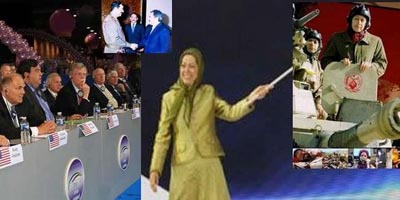
The portrait of the MKO as a democratic alternative of the Islamic Republic was drawn by the group’s skillful manipulative propaganda machine in the US Congress. A long list of American formerly prominent politicians became permanent participants and speakers at the group’s rallies and lobbying campaigns to flatter and praise Maryam Rajavi.
The MKO, in its turn, allocates a highly focused part of its propaganda on the support it gains by the side of American infamous high profiles such as John Bolton. A highlighted icon on the group’s website demonstrates several speeches by American figures in support of the cult of Maryam Rajavi. Definitely, the MKO propaganda is highly proud of having the support of a number American warmongers who do not believe in engagement with Iran.
Daniel Larison of the American Conservative makes fun of the US mainstream figures who have been deceived by the group’s propaganda apparatus. He points to Hugh Shelton, a former Chairman of the Joint Chiefs who “is opposed to diplomacy with the Iranian government, because he insists that Tehran can’t be trusted to honor its agreements”. [1]
Larison ironically notifies the deceitful approach of the MKO that is deeply trusted by certain American politicians. He suggests, “Leaving aside how crazy it is to spurn diplomacy because governments sometimes lie and break their promises, there is something especially weird about an argument that simultaneously promotes the cause of the MEK while complaining about Iranian deceit.”[2]
“As it has sought to rehabilitate itself in the West, the MEK has claimed all sorts of spurious, self-serving things about what it represents,” he reveals the hypocrisy of the MKO. “Despite being a bizarre authoritarian cult with Marxist and quasi-Islamist views, it now pretends to be exactly what Westerners want an Iranian exile group to be.”[3]
In addition, the American Conservative correspondent clarifies that manipulated Western sponsors of the MKO do not care about the fraudulent attitude of the group as long as it runs their agenda against Iran. “It doesn’t matter to the MEK’s American fans that it is lying about its political views, and they are obviously not worried about reciting those lies for Western audiences,” he writes. “Indeed, it has so completely hoodwinked them that they think it should be rewarded with American support.”[4]
“The shilling for this group by many prominent American former officials and politicians is one of the more disgraceful displays of the last decade, and as long as it continues it should be held up for derision”, he conclude. [5]
This is added to covert spying and military cooperation the group has managed with Israel despite its old history of anti-Zionism ideology. The president of National Iranian American Council (NIAC) Trita Parsi states the MKO’s Long time hostility against Israel: “The MEK’s history of violence and anti-Israeli activities is long and bloody. In the 1970s, it established deep ties with Yasser Arafat and both provided and received training from the PLO fighters… Massud Rajavi, the head of the MEK, greeted Arafat in Tehran with a Kalashnikov as a welcoming gift.”[6]
NIAC’s president suggests that the bizarre mixture of Islam and Marxism in the ideology of the MKO had made it totally hated by Israel since the group “fell in both categories”. According to Parsi, “Israeli diplomats knew that whoever seized power in Iran in 1979 would be no lover of Israel—whether it was the Islamists who opposed Israel on religious and ideological grounds, or the leftists who viewed Israel as an outpost for American imperialism in the region.” [7]
How came that the MKO turned out to become an ally of Israel?
Trita Parsi finds it not surprising in the MiddleEast where “Political one-night stands are not unusual” but he warns that “associating Israel with a cultish Iranian terror group is damaging to Israel on several levels.” [8]
This warning demonstrates the MKO’s extremely bad fame among intellectuals. It is notoriously known for its deceitful nature.
Mazda Parsi
Sources:
[1] Larison, Daniel, The Disgraceful Shilling for the MEK Continues, The American Conservative, August 9, 2014
[2] ibid
[3] ibid
[4] ibid
[5] ibid
[6] Parsi, Trita, Is Israel flirting with Iranian terrorists? , Open Zion, May 15, 2012
[7] ibid
[8] ibid
Comrades in Arms, Cases of sexual abuse by MEK Leader Massoud Rajavi in Camp Ashraf

Synopsis:
People’s Mujahedin of Iran or the MEK is a terror entity responsible for thousands of civilian death in post revolution Iran. See how this group has been more of a dark CULT fraught with corruption and harassment.
“Comrades in Arms” unfolds the story of those women who fell for deceptive slogans of the MEK. Looking for a brighter future these women ended up in Camp Ashraf, where a fate worse than death awaited them. Masoud Rajavi, the leader of the organization had come up with a new idea about marital life; it was detrimental to the future of the organization. For him, marital love was a shackle that could impede the progress of his plan.
Therefore, Rajavi called for a compulsory divorce according to which all MEK members had to get divorce. But that was not the end of the story. While he forbade his men from having sexual relations with their wives, he decided to take their place. As a result, he turned Camp Ashraf into a big harem where he could have his female comrades in arms night and day. Risking their lives, however, some of the sexual victims managed to escape from the camp to show the true colors of Rajavi, once their spiritual leader and now the most lecherous man in the world they know.
To download the video file click here
Transcript:
Batoul Soltani:
I’m Batoul Soltani, a resident of Germany. I was born in Isfahan. I’ve been living in Germany for more than four years. Before that, I was in the MEK for 20 years and before that I was in Iran for 20 years.
We were pursuing more ambitious goals and looking for a better tomorrow thinking that they – according to their slogans – would bring people more democracy or a brighter future. Looking for such ideals, we fell for their slogans and joined their organization. We had passed the point of no return.
What I saw in this organization was that women were merely tools in every level I witnessed. After all, 20 years is not a short period of time. And what we witnessed from the beginning – though my marriage conformed to social norms and was not an organizational marriage – I encountered women who were devoid of emotional involvement with their husbands but the organization had made them marry. For the first time, I saw compulsory marriages in the organization. It’s very difficult to love someone by force. I think that it’s very difficult for a woman to do so.
Zahra Goini :
I’m Zahra Goini. I was born in Tehran in 1968. In November 1986 I got married. On March, 25, 1987 I left Tehran for my honeymoon till now that I’m abroad.
It was the New Year, 1987. He said that we were going on our honeymoon. I told my family, “Look! He says that he has decided to go.” He said, “No, Zahra is lying. I don’t want to go. We are going on our honeymoon. Look! This is my ticket to the south and then we’ll make a pilgrimage to Mashhad, God willing.” As we arrived in Shiraz he told me that we might not return. We arrived in Pakistan, I think a few weeks later. It was a long journey. It took us a while to get there. We were taken to the MEK’s base. All of a sudden, an official there came and said – when my husband talked to him – my husband said, “You can return to Iran.” I was stunned, “Seriously, shall I return to Iran? Why have I come here? You’re my husband. I’ve come with you. Where shall I go alone? What shall I say? No, I’ll stay; even if you go to hell I will be with you.” Meanwhile, the organization had taken all of our money and gold. Anyway, we gave the money and two days later they told us that we would go to Iraq, albeit with new passports.
Batoul Soltani:
When we arrived in Iraq we were taken to the smartest hotels the organization was using as its bases and there was not the least sign of war there. We didn’t feel the war because Saddam had given the best hotels to the organization and the organization was using one of them as a school, one as a place for taking care of children, and one as a residential place for couples to see each other. At that time, organizational marriages were on the rise for four to five years. Of course the organization would not allow raw or junior recruits but those who were at least commanders of divisions to marry women. Everything was obligatory there: organizational obligations, organizational do’s and don’ts, organizational rules, and relations that would become tense and tenser every minute.
Nasrin Ebrahimi :
I’m Nasrin Ebrahimi. I’m 31 years old. I live in Switzerland. I’ve been living here for about eight years. Before that, I lost ten years that could have been the best years of my life in Iraq, in the Mojahedin-e-Khalq, an organization which was very easy to enter and very difficult to exit from.
As for Camp Ashraf, it’s very painful to talk about it. It’s like to be in the Guantanamo Bay detention camp for years and experience the sufferings and then talk about it.
Well, at that time he completely separated men and women from each other. We women moved to another center. We would never see a man, unless in our only street called 100 Street where we would see a man in the distance or in meetings held by Masoud Rajavi or Maryam Rajavi but we were not allowed to see them. They would sit on one side and we on the other side. If we looked at them we had to explain why. That’s why when walking we had to hold our head up or down. Our eyes shouldn’t meet a comrade’s eyes.
Zahra:
Suddenly, they said that Iran’s government had accepted UNSC resolution 598. Soon after, we had to prepare ourselves. Many forces joined us from abroad. What for? We wanted to go to Tehran. “Yesterday Mehran, today Tehran” became their slogan.
Not only weren’t the women prepared but also the men were not as well. They pushed all in Operation Eternal Light by force.
In Operation Eternal Light I was hit in the arm by shrapnel and since it was wrapped up badly – they said that you would see the doctor in ten minutes and he would unwrap it – my arm went blue because it wasn’t treated on time. After the operation, the doctor came up to me and said, “Look! They had sent a letter about you saying that this arm had to be cut off and we had to have your signature. I feel sorry for you who are a young woman to have your arm cut. It’s no problem if you were a man. But you are a young woman. I don’t know why they think so. You’ll have children in the future and have to carry your children in your arms. With one arm, it’s difficult for you. I didn’t cut your arm. I did the operation on my own initiative. You have only a three-day chance of recovery.”
It used to be much bigger. In an operation in Frankfurt they made it small. They performed a skin transplant as big as this and here they had sewn this way to here. My arm was always like this.
They threw us into Operation Eternal Light by force. They forced us to get divorced. Masoud used to say, “You who got stuck behind Charzevar Canyon, you woman or you man what were you thinking about? When you got stuck in the canyon you were thinking about the opposite sex. You as a woman were thinking about your husband and you as a man were thinking about your wife. That’s why you couldn’t advance towards Tehran. Now you must divorce all including your children.”
Masoud Rajavi:
I’m well aware. You brothers, what were you thinking about? Huh? Everyone must know well. And you sisters? We asked around hundreds – am I right, Maryam? – those who were in Operation Eternal Light in person and listened to them. Let’s remove all the obstacles in the way. This is a lesson of union and unity.
Batoul:
It was a very difficult process for me as it was a mental torture for me. I was with a group of people who kept talking about divorce and hate children and mutual life. It was not accepted for them to have children. It was a sin for the people I was with to sleep with their spouses. Divorces had begun from the upper echelons of the organization. The officials were divorcing their wives according to the plan formulated by Masoud Rajavi. The first one was Maryam Rajavi who had divorced Mehdi Abrishamchi and married Masoud Rajavi. They were expanding the scope of the plan into other women and men started from the leadership to other members.
Mehdi Abrishamchi:
In the name of God; in the name of Masoud and Maryam.
As an MEK member, as a little child of the MEK I have nothing to say except to congratulate Masoud and Maryam with all my heart and soul and that I’m brimming with ideological joys.
Batoul:
Suddenly, I saw my commander come up to me and said, “Well, this sister has charge of you.” I asked, “Sister, won’t my husband come here to see his baby?” She answered, “No, your husband has got divorced and he won’t come here. Don’t ask about him anymore.” Close to tear, I asked, “Divorce?! So what about me? So what about this baby? Why …?” She interrupted me, “No why, in the army you cannot ask why.”
Nasrin:
Is it possible not to think about love?! There used to be sessions in which we talked about love, affection, husband, wife, the past, which were called “era and weekly ablution”. When people talked you could realized that they thought about those issues. Personally speaking, I had a hair clip my boyfriend had given me in Iran. I had kept the hair clip and I held it dear. One may say that a hair clip is no big deal. But for me it was so valuable that even when I was to flee Ashraf Camp the first thing I took with me was the hair clip he had given to me. And when I got Tifu, he was the first person I called.
Masoud Rajavi:
This Maryam I’m writing equals the first in charge, which equals a full payment criterion, which in turn means 100 on 100. We chose her as a role model for you, which equals the connecting ring between you and what I want.
Batoul:
At this point, Maryam Rajavi would tell us, “You women, after divorcing your husbands, you should marry Masoud.” And we always considered her words as an ideological thesis. I could never imagine that her words would be put into practice some day and I would have to sleep with Masoud. I really thought that it was merely an ideological discourse. As for Maryam Rajavi herself, I couldn’t imagine that Masoud had sexual relationship with her. I couldn’t imagine it.
Maryam Rajavi:
Let me draw it in this diagram. Look, this is a diagram for every individual with gender on top and individuality immediately below it. I’ll explain it. Immediately individuality. This diagram has a dividing line with gender on one side and individuality on the other side. Here is the highest point of individuality. Below it there are all personal problems lined up.
Nasrin:
Maryam Rajavi used to hold many meetings for us, very long meetings. She would hold many meetings especially for women. She said, “We women all have only one husband who is Masoud Rajavi.” She even said, “You have the most handsome and the best man in the world. So what’s wrong with you?”
Maryam Rajavi:
… Here, the highest value is melting into the leadership, which means a perfect union whose fruit is getting rid of all personal shackles.
Nasrin:
She said, “Since women have mostly emotional problems you consider him as your husband.” But her words cut no ice with me. Not at all. For me it was just a talk. That’s all.
Batoul:
One day a ceremony was held – it was the wedding ceremony – in which Masoud Rajavi performed the marriage ceremony and the women stood up one by one saying, “Yes.” Before the ceremony, they had insisted that everybody should be clean and tidy and take a bath etc. Their insistence on being clean aroused my suspicions that what all that insistence was for; that why we had to have a clean, hairless body. “Are we supposed to strip naked in front of someone,” I ask myself. She even told us to perform our ablutions and be clean and tidy and wear our best, new clothes and clean socks. Before the ceremony once more they told us, “Anybody who is not clean enough or haven’t taken a bath or need to wash herself go and make herself clean.”
We were in Badizadegn Camp when informed of a pool meeting exclusively for the leadership council. At that time, I was a member of the leadership council. We attended the meeting and listen to music playing there. All of a sudden, Masoud and Maryam entered the hall. Masoud was in leisure clothes; he was wearing a T-shirt and Maryam had a soft, pink, silk dress on with her hair brushed. They entered the hall. Maryam stood behind Masoud. She didn’t sit down beside him. Masoud took a look at us and said, “Maryam, why have you brought them here again?” and that moment I realized that it was not something new. Maryam answered, “They’ve come here to unite you. They are your wives. They’ve tied the knot with you and want to be united with you. And these empty seats are for them.” I asked, “Sister Maryam, why don’t you take a seat there?” She said, “This is for each and every Masoud’s wife.” I wondered what was going on. When she said so I found some women with their headscarves fallen on the ground or some with no headscarves at all. I wondered why they had taken off their headscarves in front of brother Masoud. I told one of them about her headscarf. She said, “No problem! Who’s my nearest man than Masoud? “I love him so much. There’s no one nearer to me than Masoud.” I can remember all these scenes clearly.
Zahra:
One of the women stood at the podium saying, “Ladies, feel at home. Take your headscarves off. You dance for the leader.” I said, “We dance for the leader?! I used to be reproach for letting my hair out of the headscarf. Now you tell me to take my headscarf off and put on those clothes?!” That very woman, Batouleh Rajaee told me, “Haven’t you got divorced? You gave your hand to Masoud via Maryam. Now put Maryam aside and give your hand directly to Masoud. Now you must do your best dance for him.”
Nasrin:
They would give us freedom on purpose and encourage us to dance with music when played. The commanders would say, “Be at home! He’s your brother. Don’t you call him brother? Show your love and affection towards him.” They even liked us to kiss him. They prompted us to kiss Rajavi.
Zahra:
At first, we danced in uniform. Just two days later, that is the day we were supposed to dance – no one knew – they brought us silk fabrics. Now we had to see how those fabrics would go with our faces. Could the color brighten the complexion? After all, I was one of the candidates for dancing.
Batoul:
I suddenly realized that the senior members of the leadership council began to take their dresses off. When about 25 senior members of the leadership council began to take off their dresses and stripped naked other women who were of my rank followed suit and Maryam Rajavi and others were encouraging, “This is your pool. You should dive into it. Common on! Get undressed in front of the leader.” The meeting went on this way; for about three to four hours they were dancing. Masoud, though at first pretended to be discontent over our presence there, sat comfortably eyeing up us all.
Nasrin:
I can remember that Masoud Rajavi was staring me in the eyes. I didn’t know what I had to do at that moment. I began looking at somewhere else. That’s while we were told to say something to Masoud when he would look at us; something like “I love you” and to make a fuss over him. “The brother doesn’t look everybody in the eye.”
Rajavi would choose those who were pretty. That was overt. One could see that. It was not covert. He wasn’t even-handed with all. He would really handpick certain women, chat with them in front of other women. He would talk to them to go to him.
Batoul:
Masoud would hold the so-called “liberty dance session” with the help of Maryam reasoning that, “When you see Masoud and another woman making love it will cleanse you of jealousy. It will prevent you from being jealous for other women.”
Nasrin:
Rajavi would make us a gift of underclothes and towels. Maryam Rajavi used to stand beside him. We would pass by … At that moment you had to show how much you loved your leader or husband as Marayam Rajavi used to say. He would blow into our faces making some gestures. He would stare somebody in the eye. He did such things. Most of the time, he himself gave us underclothes or things like combs, towels and suchlike. Sometimes, Maryam Rajavi would rub them to her face and then gave them to Masoud and he gave them to us.
To get closer, he would come to our dormitories. We women were located in three separate units. To stimulate us he would say, “I’m going to unit 14 to stay the night there.” And commanders would make us ask him to come to our dormitories and be with us. “Oh brother, come and sleep with us for God’s sake. Don’t go there.” It was a childish thing; the scene was disgusting for a viewer from outside. But since we were involved in it we couldn’t realize its ugliness.
Zahra:
This was his old slogan that women were open to exploitation but we were exploited most in the organization. “You are women?”, “Yes”. “The same as men?”, “Yes”. “Men clean tanks, why don’t you women?” They sexually exploited us. We women were subjected to the worst kinds of exploitation under the name of giving women independence. They claimed that they were after equality for women and whatever they were deprived of through history.
Maryam Rajavi:
Yes, we believe that women and men are equal. We even believe that an exploited woman has more potential than an exploited man to progress and can achieved competence like him, but not haphazardly.
Batoul:
When I went to the place where Masoud’s bedroom was located in … it was a building in Badizadegan Camp the first time I went there. It was in the leadership’s residence. There was a room which was Masoud’s bedroom with a double bed in it and everything was ready for … but Masoud was not there then. I was there waiting from 8 p.m. until midnight when Masoud came. It was the first night we were together until morning. That night I saw another exploitative relations and an act that I could never imagine Masoud Rajavi doing.
It used to be done in Parsian Camp until the fall of Saddam. We would even go for a swim with Masoud and do anything. After the fall of Saddam, Parsian Camp closed down. I couldn’t imagine that such a thing would continue. I was stunned thinking that such a huge number of people were killed in the war … He made me sick. That was one thing. The other thing was that I always thought that he only had such a relationship with me. I never knew that he had the same relationship with many other women. It was after the fall of Saddam that I was informed by some women that he had had the same relationship with other women.
When Maryam Rajavi called me to see Masoud at night it didn’t mean that I was in love with Masoud waiting with bated breath to see him or that I had an overwhelming urge since I had no husband. No, that was not the case. The only reason was that I couldn’t stand up against the organization when I was there. I knew that if I had fought them they would have done away with me. I couldn’t fight with them. I thought, “If I say no to them, what would happen next? Would they leave me alone? No. and this is not a subject to be discussed in the leadership council.” Then it would come to my mind that such and such a member of the leadership council who had disappeared mysteriously might have been killed or whatever. Later on, I had no doubt that they would kill anyone who disagrees with them in the leadership council. So I decided to let him do whatever he wanted waiting for a moment to save my body. There was some Naghmeh Hakami. She wasn’t ill or whatsoever. She died all of a sudden when there was a talk about melting in the ideological leader those years. There was another woman called Seddigheh. She died too. We wondered why she died since she was healthy. Zahrah Fayyaz died. Just like that. Zahra Nouri died. At that moment I thought, “Suppose Batoul Soltani died.” By dying I mean being martyred. They even exploited corpses.
Well, he plays God. I could see Rajavi’s true colors when I looked in astonishment at what he was doing. I wondered why marriage and sexual satisfaction was banned for all men while he exempted himself. The moments I was looking at him he found me bewildered and said, “You eyeballs are sexy.”
Nasrin:
It appears that Masoud Rajavi slept every night with numerous women – at least as far as I know- with numerous, different women. On average, I would go every month or every two months to his bedroom.
It makes me sick when I hear the phrase “pure Mujahedins’ relations” because we saw the reality, because we know how a blatant lie it is. There are no pure relations in the organization. I haven’t seen relations so filthy as in the organization than in everywhere else. Isolated communities always have the filthiest relations. The more isolated, the filthier.
I attempted suicide because I had lost my hope completely. I made many pleas to them to let me leave the organization but they didn’t accept. I left no stone unturned but it was not possible. That’s why I attempted suicide. I liked to die because I couldn’t stand anymore. It was a difficult moment and my whole body was trembling when I was doing it. When I took the knife … I still can hear the sound of the knife when I put it on my wrist. I put the knife on my wrist and cut it and drop the knife. I had tied on an apron. My apron became soaked with blood. Because I was frightened and had lost a lot of blood I felt faint and fell on the ground. I had locked the door … I was terribly disappointed. I had locked the door but I didn’t know that the place I was in had another door from the street’s side and that door was open so a sister – as they used to say – called Shamsi came in and as she saw the scene she began screaming and others came in and took me to hospital by car.
After I survived the attempted suicide I felt as if I had been given another hope and had a new lease of life. I guess that I fled less than 20 days after my suicide. I fled immediately.
Batoul:
To be honest, the thought of escaping struck me the day I saw Masoud doing that in 2000. Before that, I thought that Masoud wouldn’t do that – even if he was under pressure from Maryam Rajavi, as he claimed – but that night, that is the first night I went to Masoud’s bedroom and saw that the organization was not the matter and what mattered was sex and nothing else. I made my final decision to escape there.
It was November 2006. The next month that is in December I feigned a headache and illness and slept in the dormitory and didn’t go to work saying that I felt sick and had a headache etc. and then I could make my escape. I threw caution to the wind saying that either I would be caught, taken and killed or I would escape sound and safe. I couldn’t stand being there anymore.
Right now, he’s paying the hush money to those who have left him. Therefore, it’s so important for him to protect his reputation that he’s prepared to pay the highest price to keep his former people silent. I’ve seen many of them over these recent years and I know.
– By the way, what happened that we accepted what they said? The divorce thing, the separation from our children …
– Operation Eternal Light while untrained …
– Yes.
– I think the main reason was that we were cut off from the outer world. We were not in touch with our families, friends. We were not even allowed to love each other. We had learned to accept what the organization would say without objection. But poor are those who are still there.
– That’s right. I’m thinking about that because when I told Hajar, that is Kobra Tahmasebi that I would like to experience the life outside here she asked me, “Do you know what awaits you?” I answered, “I don’t care what awaits me. I want to go outside to know how much the sexuality you’re talking about is true. I want to check whatever you talk about. I want to see if a woman including myself goes out of here will pursue a simple life or … you say that I’ll be lead astray. You know, when I left there I realized that no, it depends on how one wants to live.
– How are you?
– Are you fine?
– Yes, thanks.
– Have you brought tea?
Zahra:
I’ve got two children; one daughter, one son. I’m happy and I try to have the best for my children and give them the best not because they are my children but because I want them to learn to be honest. I teach my children to draw the line at any oppression; I teach my children to be as they are before they want to be for others. Every life has its ups and downs but I’m content with them all.
Nasrin:
Since I left the MEK I haven’t just been pursuing my personal life. The guys loom large in my mind; those who we know how got stuck there and we know that none of them wants to stay there. That’s why we have been trying to help them half of our lives. We’ve talked to members of Parliament in Europe and influential figures to show them the real face of the organization.
They appear good, happy and beautiful in public but they are rotten to the core. Only we who were there know their real characters and therefore hate their appearances. It makes us sick when Maryam Rajavi delivers a speech. It taxes our patience to listen to her speech word by words because we know that she’s lying through her teeth. It makes us puke when she talks about women.
There are some people in Auvers-sur-Oise, Paris, France which is the cradle of freedom, who haven’t take one step outside Auvers-sur-Oise for 25 years and the only thing they do is cooking. There are such women here. How can we stand Maraym Rajavi when she appears in public putting on beautiful dresses and uttering beautiful words?! It’s really disgusting for us when we know the other side of the story. We told the French, “You whose country is the cradle of freedom host a cult whose members haven’t come outside this castle, this very small place for 25 years and you don’t know what’s going on inside.”
Batoul:
That’s right that I have planned for my life and I’m living my own life and work or trying to earn good income to overcome my economic problems but as part of my job or what motivates me and I’d like to have it on my list of priorities and pursue it is that I want to be the voice of those friends and help them know the realities about the leader of the MEK, Masoud Rajavi who betrayed the trust of each and every member of the organization including my own husband, a person who himself may not know what has happened to him or that Rajavi has betrayed him but it’s my duty and the duty of those like me who left the organization. I’ve designed a website and try to make my voice and other women’s heard by the members or the public and let them know what we have gone through.
Three women speak about their dark secret past;
They are former members of the Mujahedin-e-Khalq Organization (MKO) who have revealed shocking stories
about the leaders of the terrorist cult. According to these women, all female members of the MKO were sexually abused by MKO leader Masoud Rajavi. “Comrades in Arms” is the title of a documentary which is to be aired soon on Press TV. The film that was debuted in the presence of Iranian filmmakers as well as former MKO members, investigates the sexual slavery of women and the unlawful affairs of Masouj Rajavi with female members of the cult. According to this documentary, anyone who refused Rajavi’s sexual demands would be killed. Also the three former female members narrate how couple members were forced to divorce only to be accepted into Rajavi’s circle of comrades. The MKO fled Iran in 1986 for Iraq, where it received the backing of Iraq’s executed dictator Saddam Hussein and set up a camp near the Iranian border. The terrorist group also sided with Saddam during Iraq’s eight-year imposed war on the Islamic Republic in 1980-1988 and the massacre of Shiites and Kurds during Iraq’s uprising in 1991. The MKO is listed as a terrorist organization by much of the international community but there is no end in sight for its terrorist operations against the Iranian nation.
Saman Kojouri,
Rules and restrictions for the female members of Camp Liberty has intensified, Zahra Moeini quoted a recently defected member.
Zahra Moeini ; MKO ex- member in an interview with Ashraf news talked about the situation of Women in Camp Liberty based on the testimonies of a recently defected member.
According to the defected member, residents of Camp Liberty cannot commute separately rather they should commute in groups of 4 or more.
The restrictions have demoralized the women residing in Camp Liberty .
Massoud Rajavi has ordered the officials of the Camp to intensify the limitations against women especially after the revelations by Batoul Soltani and other dispatched members who bravely exposed the internal affairs especially the sexual scandals of the cult leader such as ‘Salvation dancing’.
It is said that they may enclose the quarters of women in TTL by barbed wires and fences as it was the case in Camp Ashraf in order to control members more and to prevent more defections and escapes from the Cult.
Any contact between family members is forbidden and brainwashing sessions are held regularly.
The women are being scared from the outside world.
Excerpts from Zahra Moeni Interview with Ashraf News, Zanan-e Iran