On December18, 2015 members of Women Association visited an Albanian official in the country’s Embassy in Berlin.
Members of Women Association described their bitter experiences of their long-time imprisonment in the Mujahedin Khalq Organization (the MKO). They also recounted how they were released from the group.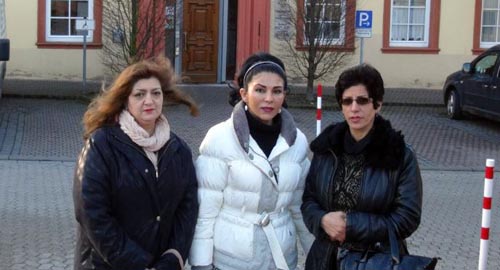
Then, they raised the following issues to enlighten the Albanian authority:
Warning on the presence and activities of the cult of Rajavi (the MKO) in the Albanian territory considering their true nature as a sect.
Concern of families whose loved ones are taken as hostages in the group; they have not had the least information on the situation of their loved ones for many years; and even after their relocation to Europe, the leadership of the group continues this inhumane policy.
Submitting a list of suffering families together with their photos and identities.
Members of the Association warned that the relocated ones in Albania are kept under a severe controlling system that forbids them from having free access to the Internet, mobile and media. They are not allowed to get married. They have to obey all orders by the leaders. In case of necessity, members are made to commit sabotage in line with the group’s aims.
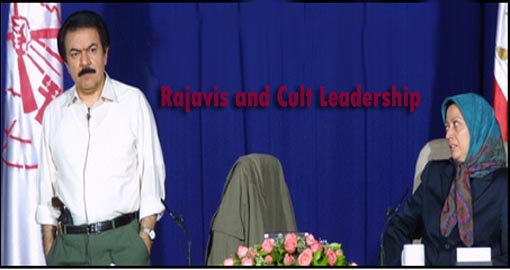
Women Association presented pictures and brochures on the organized self-immolation operations that brainwashed members of the group committed in Europe in 2003, following the arrest of Maryam Rajavi by the French Police.
They advised the Albanian official that the MKO is the obstacle between its members and the governmental and international authorities so practically members are not authorized to take any action for their future. The group tries to keep them isolated and dependent on the organization. This way, it can have more control over them and unfortunately the Albanian government do not care about this issue.
Women Association demanded the followings from Albanian Ambassador and eventually Albanian state:
Providing the possibility for families to contact their relatives without intervention of the group officials.
Recognizing of all members as refugees
Providing independent journalists and reporters with an opportunity to visit members of the cult.
Control and supervision of the Albanian State over the activities of the group as a cult that was listed as a terrorist organization until recently, considering the fact that the group believes in armed struggle and violence.
Iran Women [Iran-Zanan] Association,Translated by Nejat Society
 thousand women members of the group.
 Shocking revelations about Maoist cult leader Aravindan Balakrishnan and his female victims in a suburb of London shone a light on the normally hidden phenomenon of cultic abuse which pervades society. The danger now will be that this is treated as just another sensational story before being placed on a journalistic ‘bizarre incident’ list along with Jonestown, Wako and Heaven’s Gate, as a freak occurrence.
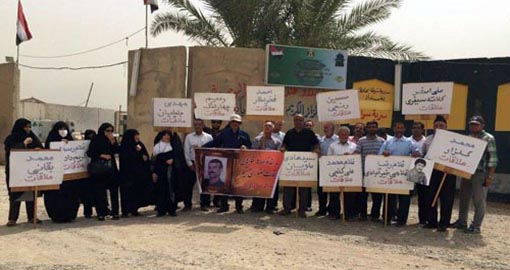
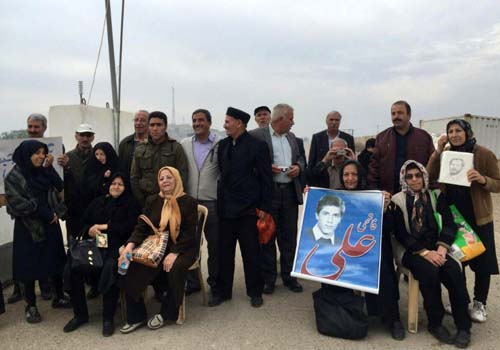 efforts of the suffering families picketing in front of Camp Liberty resulted favorably by the Iraqi Parliament.
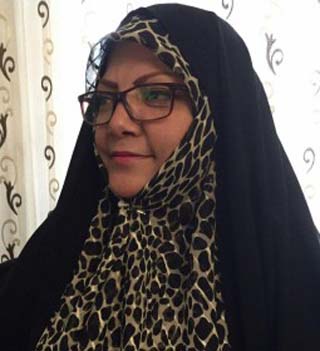 left Iran aiming to reach Turkey and then Canada or one of the European countries in December 2002 hoping to create a better future there. Unfortunately, on their way to Europe, in Turkey, they were caught by People’s Mujahedin of Iran (MKO) and then were taken to Camp Ashraf. For a long time, we were totally unaware of them until we were informed about their condition through those who had managed to flee from Camp Ashraf. Finally, for the first time, in January 2004, we went to Iraq and Camp Ashraf and succeeded in meeting them. However, we were not allowed to visit them privately in such a way that about 20 MKO members accompanied us stopping us from contacting them personally and privately. Also, they told us that we could stay there for some nights providing no other family members were with us. Afterwards, in March 2004, we revisited Camp Ashraf with three other families. This time, not only didn’t they let us meet our brothers, but they also imprisoned and investigated us. Although a number of children and elderly people were accompanying us, they deprived us of any food for a night and then in the morning they beat and expelled us from Camp Ashraf. Afterwards, we wrote to an American commander, who was there, and sued them for what they did to us. Also, after returning back to Iran, we wrote to Human Rights Watch and complained about what they had done. At the same time when Human Rights Watch was addressing our proceedings and they were condemned, we received an Email inviting us to Camp Ashraf in November 2004 saying that this time we would be allowed to meet them provided that we were alone and no family accompany us. Having been unaware of the situation that they had been investigated by Human Rights Watch for what they had done, we went to Camp Ashraf being incognizant of their conspiracy. We and my brothers, who were dressed up formally, stayed there and were filmed. After returning to Iran, we had a telephone contact with Human Rights Watch representative in London named Doroodi, who told us that we lay and that we both had met our brothers and had taken photographs with them in Camp Ashraf. They deceived us by taking photos pretending that we had met our brothers using these photos against us in Human Rights Watch proceedings. Now, according to your sound judgment, are they liars and fraudulent or us??