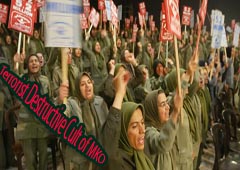
MKO former members
Many defected members of the terrorist Mojahedin-e Khalq Organization (MKO, also known as MEK, NCRI or PMOI) are willing to surrender themselves to the Tehran government to return to Iran, a senior Iraqi 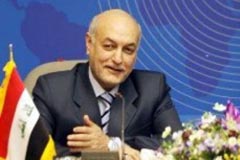 diplomat said.
"If the grounds are paved to facilitate their (MKO members) repatriation to Iran this can persuade other MKO members to do the same," Iraqi Ambassador to Tehran Mohammad Majid Al-Sheikh told FNA on Saturday.
He explained that 10 MKO members are currently settled in a hotel in Baghdad waiting to return to Iran, and said, "The representative of the UN Secretary General Ban Ki-moon has asked me to talk to the Iranian officials to facilitate the return of these MKO members to Iran."
The Iraqi ambassador pointed to an agreement between Iran and Iraq on extradition of criminals, and said, "This agreement will be implemented in the next several weeks and we are doing our best to implement it."
He reiterated that if Iran files a lawsuit against the MKO at the Interpol, the Interpol can take action and arrest the MKO members and hand them over to Iran according to the universally accepted laws on the extradition of criminals.
The last group of MKO terrorists at Camp Ashraf, now called Camp New Iraq, was evicted by the Iraqi government on September 11, 2012 to join other members of the terrorist group in the former US-held Camp Liberty, now called Camp Hurriya, near Baghdad International Airport where they are awaiting relocation to other countries.
The MKO, founded in the 1960s, blended elements of Islamism and Stalinism and participated in the overthrow of the US-backed Shah of Iran in 1979. Ahead of the revolution, the MKO conducted attacks and assassinations against both Iranian and western targets.
The group started assassination of the citizens and officials after the revolution in a bid to take control of the newly-established Islamic Republic. It killed several of Iran’s new leaders in the early years after the revolution, including the then President, Mohammad Ali Rajayee, Prime Minister, Mohammad Javad Bahonar and the Judiciary Chief, Mohammad Hossein Beheshti who were killed in bomb attacks by the MKO members in 1981.
The group fled to Iraq in 1986, where it was protected by Saddam Hussein and where it helped the Iraqi dictator suppress Shiite and Kurd uprisings in the country.
The terrorist group joined Saddam’s army during the Iraqi imposed war on Iran (1980-1988) and helped Saddam and killed thousands of Iranian civilians and soldiers during the US-backed Iraqi imposed war on Iran.
Since the 2003 US invasion of Iraq, the group, which now adheres to a pro-free-market philosophy, has been strongly backed by neo-conservatives in the United States, who eventually took the MKO off the US terror list.
The US formally removed the MKO from its list of terror organizations in early September 2012, one week after the then Secretary of State, Hillary Clinton, sent the US Congress a classified communication about the move. The decision made by Clinton enabled the group to have its assets under the US jurisdiction unfrozen and do business with the American entities, the State Department said in a statement at the time.
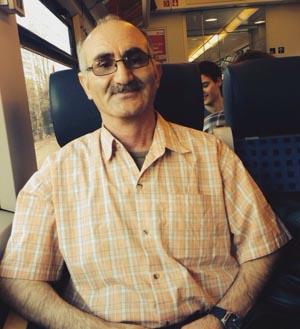 the relocation of the second convoy in Camp Liberty. I rushed to Iraqi Police station while MKO guards were chasing me. Finally, leaving the MKO security forces behind, I thrived to reach Iraqis.
 years of my stay in Newcastle became more and more interested in the so-called ‘revolutionary groups’, one of which was the Mojahedin-e Khalq Organization of Iran (MKO).” Massoud Khodabandeh describes that period. “In those days the Mojahedin comprised no more than a group of martyred or imprisoned young people who were [considered] as followers of Ayatollah Khomeini.”
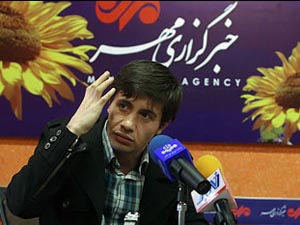 the group; Yaser grew up in the MKO camps in Iraq.
 confinement. He was brought on trial and accused of being the agent of Iranian Intelligence Ministry!
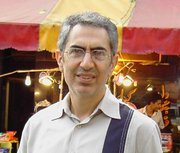 (MEK, PMOI) for twenty years, serving as the organizations representative to the United Nations and to the United States during his tenure. The group is largely obscured from public discourse, or more recently veiled in headlines describing them as political dissidents or refugees. To those more familiar with the group the debate tends to focus primarily on their nature. For many MEK is a dangerous terrorist organization, yet for others they are freedom fighters and the only legitimate alternative to the Iranian Government. They’ve been subject to several pieces suggesting they work as assassins for the United States and Israel. Masoud has published a book called Memoirs of an Iranian Rebel about his experience in the organization, which he very candidly describes in detail as a cult, and one that has long lost its strength and vibrance. He now focuses much of his work on the research and understanding of cults, terrorism, and cult behavior within those structures.
 ed war provided them with the chance.
 in Ahwaz [ a city near border] were children who were playing soccer, chasing each other and speaking Persian. I noticed children’s playing in other cities too. I was really impressed … I thought when I was at their age I was experiencing war. Those days, most nights we were awaken by air raid siren and had to go to shelters. We had only two TV channels and a lot of passionate revolutionary slogans… basically I don’t think my generation can claim to have had a childhood.”
 nature of the group which has a long history of hostility and terrorist attacks against the Iranian nation. Ebrahim Khodabandeh and Maryam Sanjabi had been working for the MKO for over 20 years before escaping from the group’s camp in Iraq almost 10 years ago.