Nejat Bloggers
Throughout history, there have always been numerous cults of personality which are often found in dictatorships. As we have studied the stories of the pharaohs of ancient Egypt or Roman Empire, etc. the kings had a divine right and they were sometimes considered or in better words worshiped as god-kings.

Also, in our time, personality cults are common in the monarchist, totalitarian systems with revolutionary opinions such as Joseph Stalin, Adolf Hitler and Pol Pot of Cambodia who all slaughtered a lot of innocent civilians during their ruling period.
The leader of the cult of personality usually seeks to minimize the public power and influence. The members of this type of system gradually loose their power of thinking, choosing and acting instead they submit to the absolute obedience to the person on the head.
In Mujahedin-Khalq Organization (the cult of Rajavi) as well as many other destructive cults, the leaders Masud Rajavi and his third wife Maryam Rajavi have turned the group – which was only a guerrilla force against Iranian regime – into a cult of personality where the members are manipulated to worship their leader as the messenger of God who gets his instruction directly from God. These members who are the victims of a destructive cult are so seriously brainwashed who are always ready to scarify themselves for the leaders by committing self-immolations and suicide terrorist operations. The examples of those operations are simply found in the history of MKO personality cult.
The heroic image that MKO shows to the members to provoke their praise and admiration have turned the group from an armed guerrilla opposition into a terrorist destructive cult which is much more dangerous. When a fighter of an armed guerrilla struggles for his cause he is likely to suffer some physical difficulties but when you are a captive of a cult of personality you are always under mental and physical torture and likely to become an anti-social person who might violate social norms without any sense of guilt or regret.
The armed struggle is mostly defined as Guerilla warfare which is considered as the unconventional warfare in which the guerrilla army uses mobile tactics
(ambushes, raids, etc) to fight a larger army or enemy.
According to Wikipedia this term (guerrilla) means “little war” in Spanish and the concept acknowledges a conflict between armed civilians against a powerful nation state army. Also, as Che Guevara, the Argentine revolutionist, writes in his book “Guerrilla Warfare”:
”the guerrilla band is an armed nucleus, the fighting vanguard of the people. It draws its great force from the mass of the people themselves “
In China, the Maoist Theory of People’s War believes that the guerrilla earns population’s support by distributing propaganda. To answer the question “why does the guerrilla fighter fight?” Ernesto Che Guevara responds:
”the guerrilla fighter is a social reformer that he takes up arms responding to the angry protest of the people against their oppressors.”
Therefore, as the most revolutionary guerrilla leaders believe the support of the population is of great importance to guerrilla fighters to provide shelter, supply, finance and intelligence for them. So having the base of the people guarantees the success of a guerrilla movement and this is what the MKO lacks. Instead they could operate by enjoying the protection of the friendly regime of Saddam Hussein that provided them with funds, weapons, military training and bases, but the support of Baath regime for MKO just made their situation among the masses of Iranian population worst because their cooperation with the enemy of Iran turn these freedom fighters into traitors who have been Saddam’s mercenary forces for 3 decades. The experts think that relationships with civil populations are one of the most important factors in the guerrilla fighters’ success or failure.
MKO lost its public support in three phases. The first phase happened following their use of terror after the Islamic Revolution, when they launched terror operations in civil targets and assassinated a large number of their compatriots. Like the communist forces in the Philippines and Malaysia, these strikes helped turn civilian opinion against the so-called freedom fighters. Such tactics had no result except the withdrawal of the support of Iranians for MKO terrorists.
As mentioned above the second phase of the withdrawal of public support for MKO was after their cooperation with Saddam dictatorship during the eight years of Iran- Iraq war in which the MEK served as Saddam’s private army, provided intelligence for Baathist Intelligence services. MKO bases donated by Saddam Hussein were mostly located near Iranian border of which is an important factor in guerrilla warfare but after the fall of Saddam, their bases were reduced to the one in the Northern part of Baghdad, Camp Ashraf, in Diala province. Thus after the American invasion to Iraq and the take over of Camp Ashraf by the US army, the MEK were restricted to their only remote base, Ashraf.
The third phase of the public hatred toward MKO was as recent as the visits made by the families of captured MKO members in Camp Ashraf. Families of MEK/MKO members were the only people who were considered as sympathizers by MKO leaders but they are also turning to their enemies because they are seriously seeking the visit of their beloved ones who are captives of MKO cult in Camp Ashraf. The best example is their former supporter, Mustafa Muhammadi who has appealed for the arrest of Camp Ashraf leaders who have kept his daughter for years.
Another important element in guerrilla warfare is weapon of which the NLA had plenty of, due to their ex-master Saddam Hussein’s donations .But they had to submit all their weapons to the US army that disarmed the group after the seizure of Camp Ashraf in 2003.
Nowadays the MKO lacks public support ,weapon and also border but their only last resort includes Camp Ashraf that itself is supposed to be handed over to Iraqi Government and eventually to be shut down.
MKO leaders find no way except prolonging their stay in Camp Ashraf, Iraq since their vital need is now awning a location where they can survive as a coercive army.
This shows the importance of Camp Ashraf while MKO has no public support to rely on, no weapon to fight with and no border to launch cross border attacks.
Basically, the robots are built to help human being live an easier, more comfortable life aiding him to reach his goals. Man can get closer to his ambitions or ideals by using the robots.
The leaders of MKO, as well as the leaders of the other destructive cults have chosen a simpler solution to their problems. They try to make robots out of the human beings who are under their rule in order to get their ambitions.
Now, after three decades of the existence of Camp Ashraf in Diala Province, Iraq and Camp Maryam in Auvers-sur-Oise France, the two bases have turned into the cities of robots:
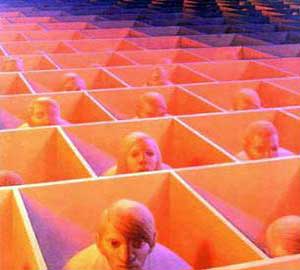
In the city of robots everyday is like the other day. Any event, revolution and change happen around the world, no change happens in robots’ schedule. The ability of making a decision, choosing and changing is a gift that the robots miss. Indeed change is something necessary that makes the life more interesting and makes the hope blossom in the heart of people.
For the human-like robots of camp Ashraf and even Camp Maryam, in the heart of modern Europe, everyday is the same as yesterday. They get up at a certain time early in the morning; they eat at a certain time, in a certain place. They do the same thing everyday for example watering a garden or cleaning a tank…. They go to bed at certain time every night. While they are asleep, they should care about their dreams and nightmares because they shouldn’t be against the organization’s ideology. If so, the member has to write the contradictions and submit to his or her official and accept the consequences.
They should attend the manipulation meetings everyday to reveal their internal thoughts so as nothing of their thought remain hidden to their leaders. Therefore in the city of robots no one has individuality. Everybody belongs to the leader and has to devote his entire life to him.
But the robots of MKO are not equipped with remote control because they sometimes remember their owns and their belongings like the mothers including Batoul Soltani who had kept her children’s photos for years and watched them in the bathroom under heavy fear and anxiety, to keep the least hope in her heart.
But the leaders of MKO go further to kill the hope and will. They force the women in the cult to have hysterectomy surgery because the robots do not substantially have the power of reproduction or giving birth to the other people. This is the way the destructive cult of Rajavi uses along with its process of building robots.
With the growth of globalization and immigration, it has become clear that modern forms of slavery are growing in the world. The definition of slavery,
according to Joseph Rowntree Foundation includes three principal elements of the exploitive relationship:
– Sever economic exploitation
– Lack of a human rights framework
– Control of one person over another by the prospect or reality of violence.
There are more than 27 million slaves in the world more than the number of people extracted from Africa throughout the 400 years of the slave trade.
The very important factor that makes a difference between poor working condition and slavery is that the enslaved person has no real alternative but to submit to the abusive relationship.
The withdrawal of passports or ID documents, deceit and abuse of power, the use of physical and psychological pressure are the functions of all abusive slavery structures. The crucial point is that anyone who do protest against such conditions may be beaten, abused, raped, deported, tortured or even killed. These attacks can result in serious physical and psychological trauma.
All the above-mentioned criteria of modern slavery are perfectly functioned by Mujahedin Khalq terrorist cult. Unfortunately slavery is a problem people think we solved long ago but in fact, it’s still alive. It has simply taken a new form. People in Auvers-sur-Oise in a Parisian suburb are living next door to slaves without knowing it. The MKO members in Camp Maryam, France and Camp Ashraf, Iraq, are suffering the same poor conditions of the enslaved captives. These victims who are kept in a strange land can grow dependent on their captors, if only to survive. The leaders of MKO cult use a range of crimes-fraud, coercion, physical and psychological violence to hold their victims captive. They confiscate passports and during Saddam Hussein’s leadership threatened to turn their captives over to the Iraqi authorities if they refused to obey. Even if victims can escape, they often fear leaving because they are not able to deal with local difficulties. But since the American invasion to Iraq in 2003 and the disarmament of MKO by the US army, the victims found an opportunity to leave the cult. More than 600 have left Camp Ashraf so far. The 3300 members remaining in Ashraf and others who are residing in Auvers-sur-Oise are still victims of serious human rights violations. A broad-based awareness campaign should be launched to improve the supervision of Human Rights Organizations to strengthen protections for the modern slaves captured by the cult of Rajavi. Our former comrades who are victims of modern slavery need urgent help. We can make a tangible contribution to change their condition. The international community should get involved in liberating all slaves around the world especially those who are suffering the poor condition of living in cult of personality under the rule of the dictatorship of the Rajavis.
Your Excellency,
We would like to inform you that the terrorists of Mujahedin Khalq Organization, according to their cult-like practices, are systematically insulting their dissidents calling them as traitors and mercenaries.
The families, whose names are attached to the letter, have relatives in Camp Ashraf, Iraq. They have always complained against MKO leaders who do not allow them to leave the cult and to contact their families. Instead of answering these demands, the MKO leaders insult the families with indecent words like “animals”.
In their TV show called File (Parvande), the MKO tries to make its audience believe that all those who attend Nejat Society’s gathering in front of British Embassy to protest against the removal of MKO from the terrorist list, in order to prevent their children from being abused by the cult, are the agents of Iranian regime. As your Excellency has enough information on cult practices, you would agree that this is the popular method used by all cults that consider themselves as superior to the society and are prepared to revenge from us and our beloved ones in Camp Ashraf.
We hope that the humanitarian efforts of you and your colleagues in Iraq will pave the way for the release of our children from Rajavi’s camp. We are definitely sure that their freedom is only feasible by reviving their individuality and family relations. The insults made by MKO will not influence the determination of the families to liberate their children.
Cc:
UN office in Tehran
British Embassy in Tehran
Fars News Agency
Press TV website
Tehran:
1. Mohammad Ali Sasani
2. Mohammad Ghayumi
3. Masud Nuri
4. Mahmoud Ahani
5. Alireza Ba’ba’ri
6. Mehran Diyale
7. Majid Amini
8. Rouh AllahBorhani
9. Hussein Jannat
10. Meitham Sakhaee
11. Ramezan Saeedi
12. Mehdi Nikbakht
13. HassanAli Baha’rlu
14. Hesam A’mel
15. Ziba Moheb Mohammadi
16. Aghil Sa’beri
17. Fahim Azara’ni
Lorestan:
18. Hadi Arba’bi
19. Nur Mohammad Biranvand
20. Mojtaba Java’heri
21. Masume Shah Karami
22. Ali Asgar JaafarPur
23. Zohreh Qobari
24. Ahmad Golpayegan
25. Gholam Ali Mirzaee
26. Rahman Mohammadian
27. Hamed Moradi
28. Eskandar Arjmandi
29. Sedighe Molaee
30. Mohammad Khatibi
Tabriz:
31. Mohammad Hussein Da’dgar Eghdam
32. Naser Saeedi
33. Mohammad Reza Seddiq
34. Hassan Rahnamay, Ana Khatun
35. Mohammad Reza Purmahdi
36. Mansur Abba’skhani
37. Hamid Sojud
38. Ali Jowdat
39. Mir Mohsen Mortazavi
40. Bakhsh Ali Alizade
41. Ra‘min Hassan pur Showti
42. Ra‘min Hassan pur Showti
43. Majid Hassan Pur Showti
44. Mehdi Sojudi
45. Shahram Bahadori
46. Shahrud Bahadori
47. Abulfazl Sheikh Beglu
48. Ali Asqar Karami haft Cheshme
49. Seyyed Morteza Akbari Nasab
50. Musa Akberi Nasab
51. Salman Dolat Panah
52. Shokrollah Sadeghlu
53. Mehdi Saraee
54. Maryam Torabi
55. Masume Torabi
56. Ghorban Torabi
57. Mohammad Reza Torabi
58. Barat Ali Rigi
59. Hadi Naser Moghaddam
60. Hamid Mohammad Agh Atabay
61. Ashur Mohammad Varshi
62. Ali Khormali
63. Abdolhamid Raufian
64. Leila Nargesi
65. Hushang Gol Ali Pur
66. Iraj Gol Ali Pur
67. Farhan Ghovanlu
68. Marziye Ghafari
69. Ghorban Arab
70. Reza Ali Mirzaiee
71. Yahya’ Ziyarati
72. Esmaeel Shafaghi Kakhaki
73. Ebrahim Rezvani
Mazandaran:
74. Mostafa Asefi
75. Ayub Esta
76. Majid Mohammadi
77. Azar Karim Pur
78. Davoud Karim Pur
79. Yaqub Musavi Uraymi
80. Somaye Mohammadi
81. Kazem Samadi
82. Ali Reza Tavakoli
83. Javad Seddiqi
84. Mohammad Reza Khomeisi
85. Mohammad Reza Qanbar Zade
86. Seyyed Javad Yaqubi
87. Mehdi Thabet rostami
88. Ahmad Rezaiee
89. Mohammad Reza Khaza‘ee
90. Pari Amirzad
91. Rokhsare Zamani
92. Fakhri Amir Ali Pur
93. Musa Izakiyan
94. Hassan Shaa‘ba‘n Pur
95. Mohsen Shaabani
96. Mir Nezam Hassani Motlagh
97. Parwiz Heidar Zade
98. Mahin Ghobadi
99. Iraj Soltani
100. Behzad Farokhi
101. Ali Shirgahi
102. Zari Akhani
103. Maryam Motevalli
104. Ensiye Gol Dust
105. Mehdi Fard
106. Eynollah Shaabani
107. Jamal Mohammad Janpur
108. Mohammad Taghi Ab Khezr
109. Ali Asghar Baba pur
110. Rahim Sohrabi
111. Masud Daryabari
112. Dust Mohammad Farahi
113. Hussein Ali Alizade
114. Jamal Nateghi
115. Hadi Shabani
116. Samad Nazari
Yazd:
117. Khadije Adib
118. Massih
119. Ahmad Paydar Ardekani
120. Shahin Haeri Zade
121. Esmaieel Vafa Yaghmaiee
122. Seyyed Hussein Razavi Zade
123. Mohammad Zare Zade
124. Tahere Soltani Gord Faramarzi
125. Ali Reza Karbalaiee Sabagh
126. Abual Ghasem Ghafuri Rokn Abadi
Ahwaz:
127. Mohammad Hamadi
128. Alireza Moazen Tabrizi
129. Abdolreza Kalantari
130. Mohammad Karimi
131. Rahim Chahar Lang
132. Leila Dalafi
133. Maryam Dalafi
134. Gholam Ali Sajedi far
135. Amir Mazrae Fard
136. Seyyed Nader Achrash
137. Saieed Naseri
138. Ali Sorkhyan
139. Ali Akbar Karami
140. Yaber Hazbavi
141. Kazem Pur Khafajiyan
142. Seyyed Reza seyyed Latifi
143. Iman Tork Ali Askari Rizi
144. Thaleb Farhan
145. Seyyed Nader Bani Farahiyan
146. Yabar Qanava’ti
147. Hamid Dehdar Hassani
148. Shahreza Babadi
Qom:
149. Fazlollah Samieeyan
150. Abdollah Ostovari
151. Hadi –Saeed Ahmadiyan Shirdel
152. Ahmad Jahantab
153. Jalal –Faride Sharifi
154. Ali Rasekhi
155. Ahmad – Yaser Haj Mehdi
Kermanshah:
156. Mohsen Hassan Kaviyar
157. Shahab Foruzande
158. Mehdi Hamid far
159. Peyman Korde Mir
160. Ali morad Lotfi
161. Ali panah Farahnaki
162. Bahmab Aazami
163. Saaadollah Seyfi
164. Bozorgmehr
165. Suri
166. Khalu Kakaiee
Gilan:
167. Hassan Zade
168. alafteh
169. Balaiee
170. Talavati
171. Pur Hassan
172. Hamid Haji Pur
173. Amin Asadiyan
174. Ashgar Hatam Churi
175. Khosro Salighe Dar
176. Mohammad Mahmoudi
177. Esmaiel Nik Zade
178. Mohammad Ali Zade
179. Jahangir Jamali
180. Jabbar Sabaiee
181. Mohammad Javad Noruzi
182. Ali Tulami Moghaddam
183. Hamid Ali Akbari
184. Abdolreza Zahedi
185. Hojjat Rafiee
186. Ali Gholi Zade
187. Narges Latifi
188. Seyyede Zahra Husseini
189. Esmaeel Pur Mohammad Ali
190. Farhad Hassanpur
Karaj:
191. Fereydun Oqbaiee
192. Ali Ardalani
193. Mojtaba Alimardani
194. Mehdi Fard
195. Azade Sabur
196. Kave Pur Hamedani
197. Mostafa Attar
198. Mahmoud reza Gholi
199. Ali Ashrafi
200. Bijan Reza vandi
201. Soheyl Khattar
Shiraz:
202. Mohammad Reza & Ahmad Reza Iranpur
203. Mahmud Talebi Miyandeh
204. Mahmud Dashtestani Nejad
205. Alireza Rahmati
206. Farhad Bazr Afkan
207. Alkhas Kuh Peyma
208. Mohammad Shahriyari
209. Mohammad Kazem Nematollahi
210. Abuthaleb Hashemi
211. Mostafa Zare Mohazabiye
212. Kaka Jan Azad
213. Iraj Basiri
214. Mohammad Bagher Momen Zade
215. Qolamreza Behruzi
Mashhad:
216. Mehran Karimi
217. Abdolmajid Abdollahi
218. Aliashgar Amini
219. Qolamreza Sadehgi Abkuh
220. Qolamreza Ghanbari
221. Qolamreza Musavi
222. Teymur Esmaeeli
223. Reza Almasi Zade
224. Ramezan Gharban zade
Zanjan:
225. Asghar Mohamamdi Kamiyab
226. Naser Yegani Karomchi
227. Habibollah Ghasemi
228. Ali Madad Sadeghi
229. Ali Hussein Jamaati
Bandar Abbas:
230. Hassan Atash Afzun
231. Siyavosh Darya Peyma
Qazvin:
232. Alireza Rahmani
233. Hussein Shojaiee Ali Abadi
234. Masume Oladi Salkhurie
235. Zahra Fonudi
236. Mohammad Hussein Kam bakhsh
237. Alireza Gholami
238. Mahmoud Zulghadri
239. Ebrahim Mohammadiyan Asl
240. Bahman Rahimi
241. Jaa‘far Ba‘ba‘iee Nejad
242. Fa‘teme Ameli
243. Mir Mozaffar mir Azizi
244. Mohammad Hadi Taali
245. Isa‘ Akbar Zade
246. Davud Heidari
247. Hekmatollah Safar Kha‘nlu
Shadow Defence Minister Dr Liam Fox meeting Nejat Society delegation in London supported a humanitarian solution for Camp Ashraf in Iraq
London,December17,2008-The Nejat Society delegation in London met today with Dr Liam Fox, Shadow Secretary of State for Defence. 
Nejat representatives described conditions inside Camp Ashraf in Iraq. The camp is the military/ideological training base of the Mojahedin-e Khalq (MKO) cult organisation. The group has been detained there by the American army since 2003.
Dr Fox was moved by the stories of two women in the delegation who have not seen their relatives for many years because of MKO directives for members to divorce from their spouses, children and families. Mrs Foroushani, from Isfahan, has a son in Camp Ashraf and Mrs Iranpour, from Shiraz, has two brothers in the camp.

Dr Fox expressed his concern that neither the US army nor the Iraqi government have moved to dismantle the military infrastructure of what is in fact a foreign terrorist organisation and its training base in Iraq. The MKO has been listed as a terrorist entity in the US since 1997. He told the delegation he would raise the issue directly with the Americans at the earliest opportunity.
The US army has agreed to hand over control of the camp to Iraqi authorities by the end of this year when the Iraqi military will take over protection of the camp and its detainees. Although for five years the Iraqi government has demanded that the MKO be removed from Iraqi territory, guarantees have been given that no MKO will be forced back to Iran against their will.
Nejat is asking UK policy and decision makers along with human rights organisations in the UK to support the position of the Iraqi government toward the MKO.
The delegation explained that the first steps toward resolving the problem posed by Camp Ashraf include facilitating free and unfettered reunions between families and their relatives in the camp. A separate camp should immediately be established adjacent to the camp in which members can take refuge if they choose to renounce violence and go back to civilian life. Nobody should be forced to remain a member of a dangerous paramilitary force against their will.
Dr Fox expressed his satisfaction that this approach would be a humanitarian way forward to resolving the problem.
Report by Iran Interlink
Also read:
– Nejat Society Asks UK to Support Iraqi Government Plans for Camp Ashraf Victims
was open to the public from November 16 to 22. Some 470 Iranian publications and news agencies as well as media organizations from 27 foreign countries attended the event.

A lot of Iranian and foreign journalists and also the ordinary visitors welcomed the humanitarian objectives of Nejat Society appreciating its efforts and hoping success for it. They wanted to know how to aid the Society.
– An elderly citizen said:” I distributed Mujahed journal when I was a high school student. After sometime I got to know about their real nature due to my parents guide then I left them. I am happy that there was some one to lead me at that time but some were captured and ended with being Saddam’s accomplice.”
– An army officer said:”No Iranian in any case accepts cooperation with the offensive enemy. I have always considered them as traitors but I didn’t know that they even have no pity for their own members and torture and imprison them.
– An elderly woman said that when she was abroad, the MKO used too much effort to recruit her but she has always felt that although MKO supporters are honest but no honesty is seen in its leaders’ words and now she has understood that her feeling was definitely right.
Three people were looking attentively at a poster of self-immolation in Paris. One was explaining the story for the two others. They were so shocked and declared their hatred towards such an act done by the cult leaders to order the members to burn themselves.

A delegation from Nejat Society travelled to London in December,2008.
During their visit to London,(including former members and families) delegates of Nejat NGO will pursue the case of Mujahedin-e-Khalq members in Camp Ashraf Iraq via their meetings with human rights organizations and western policy makers and media. The news of Nejat delegation’s trip to London was covered by various News agencies and websites.
Nejat’ s main demand includes opening the gates of Ashraf to families and the handover of those captured.
Below is the link to some of the newsagencies covered the trip and the mission of Nejat Society to London.
![]()